Elon Musk, the world’s richest person and CEO of Tesla, recently stated that Tesla may begin selling its humanoid robot, “Optimus,” to the public by the end of next year.
Speaking on Thursday (January 22) at the World Economic Forum annual meeting in Davos, Switzerland, Musk noted that Tesla(TSLA) is already utilizing some Optimus units in its factories to perform simple tasks. He predicted that by the end of 2026, these robots will be capable of “completing more complex work.“
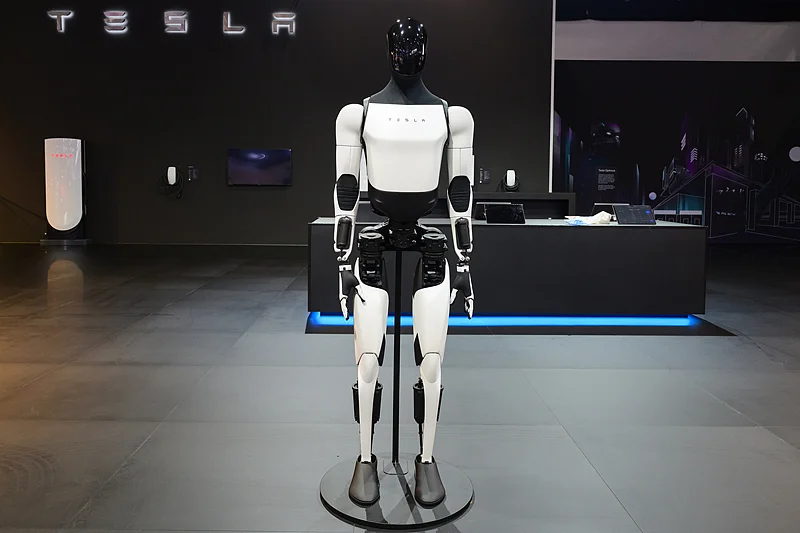
Musk emphasized that Tesla will only officially launch the product to the public once it is “convinced that the product possesses extremely high reliability, exceptional safety, and a very broad range of functions.”
These latest remarks provide a more definitive timeline for this future business line. While Musk has frequently touted the massive potential of Optimus, his previous statements regarding production pace and targets had remained relatively vague. During an earnings call in January 2025, he offered a “very rough guess” that Tesla would begin delivering Optimus robots to other companies in the second half of 2026.
Key Highlights from the Conversation with Larry Fink
In a dialogue with BlackRock CEO Larry Fink, Musk touched upon several topics, including space-based data centers, robotaxis, and power supply bottlenecks. His key points included:
- Robot Proliferation: He expects robot production to meet all human needs, predicting there will eventually be “billions” of humanoid robots. These robots will also be capable of performing caregiving tasks.
- AI Costs and Constraints: The cost of AI is plummeting and will become extremely low. However, the limiting factor for AI deployment is electricity supply. AI chip production will soon exceed the amount of power available to support their operation.
- SpaceX and Solar Energy: In a few years, SpaceX will launch solar-powered AI satellites. Musk criticized high U.S. solar tariffs for artificially inflating the economic cost of deployment. SpaceX and Tesla are scaling solar production with a target of 100GW per year.
- Autonomous Driving: Robotaxi services will become “very, very widespread” within the U.S. by the end of this year. He also hopes to secure approval for Full Self-Driving (FSD) in Europe by next month.
- Starship and Space AI: Musk aims to prove the full reusability of Starship this year. He also noted that the cheapest place to deploy AI is in space, calling space-based solar AI data centers an “obvious choice.”
- Intelligence Forecast: He predicts that by 2030, AI will be smarter than all of humanity combined.
Strategic Pivot and Historical Context
Tesla has now positioned humanoid robots as a core pillar of its future development, alongside AI and autonomous driving technology. Musk has previously suggested that Tesla’s future will increasingly depend on these robots.
In contrast, Tesla’s traditional core business—electric vehicle sales—is under pressure due to a lack of fresh product lines and the phase-out of U.S. EV subsidies, resulting in two consecutive years of declining deliveries. Earlier this week, Musk warned that the initial mass production of Optimus and the Cybercab (robotaxi) would be “exceptionally slow and agonizing.“
Notably, Musk’s appearance at Davos was a surprise, as he was added to the Thursday agenda at the last minute. The billionaire has frequently criticized the forum in the past, calling the annual gathering of global elites “boring” and slamming the World Economic Forum (WEF) as increasingly resembling an “unelected world government that people didn’t ask for and don’t want.”
In 2022, he famously posted on social media: “What even is the WEF / Davos? Are they trying to be the boss of Earth?”