CRML Stock Price

One Year into Trump’s Return: S&P 500 Gains Nearly 16%. Amidst a Midterm Election Year, How Should Investors Hedge and Position Themselves?

A 16% rise in one year—this is the gain recorded by the S&P 500 Index (.SPX) during Donald Trump’s first year back in the Oval Office.

However, behind this seemingly stellar figure lies a “rollercoaster” journey for Wall Street, characterized by sharp corrections intertwined with historic highs. This past year has proven one thing to investors: even in the face of sweeping policy shifts, the market possesses a powerful ability to digest change. But as we enter a volatile 2026, the market’s resilience will face even sterner tests.

As the “Trump 2.0” era enters a Midterm Election year, what should investors watch for? Which sectors are poised to benefit? This article provides an in-depth breakdown.

A Bull Market Amidst Turmoil: The Quality of the 16% Gain

Since Donald Trump was sworn in as the 47th President of the United States on January 20, 2025, the U.S. stock market has demonstrated remarkable pressure resistance. Although Trump announced his “Liberation Day” tariff policies on April 2, triggering market tremors, investors were quick to adopt a “buy the dip” strategy. This pattern, dubbed “The TACO Trade” by some market participants, reflects a new consensus: the administration’s aggressive policy proclamations may not necessarily translate into lasting market damage.

From a historical perspective, a 16% gain is impressive, outperforming the historical median of 9% for a president’s first year since 1929. However, it is not the “strongest in history.” In comparison, the S&P 500 rose 16.4% during President Biden’s first year, while Trump’s own first term in 2017 saw a surge of 23.7%.
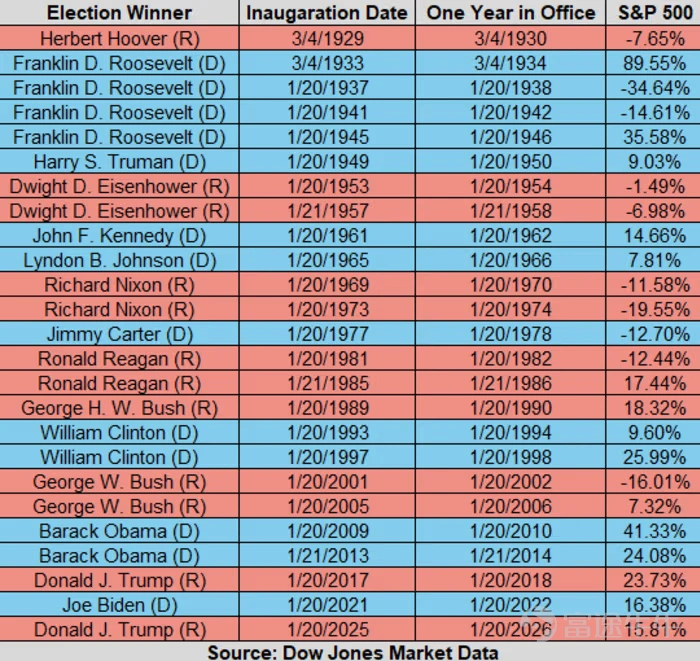
For those who originally expected Trump’s second term to be “extremely bullish” for the markets, this year has been full of challenges.

Chris Maxey, Managing Director and Chief Market Strategist at Wealthspire Advisors, described it this way: “The first year of Trump’s return has seen news coming at us like water from a firehose.” He noted that the most important lesson investors have learned over the past year is to “stay patient.” Overinterpreting political headlines often leads to portfolio errors rather than gains.

There were widespread fears that Trump’s volatile tariff policies would ignite a global trade war, reignite inflation, or push the economy into recession. To date, these worst-case scenarios have not materialized. While some tariff policies still await a final ruling from the Supreme Court, the S&P 500 has set 42 record closing highs since last January, while the Dow Jones and Nasdaq have refreshed their records 23 and 36 times, respectively.


2026 Outlook: The Shadows of Midterm Elections and Geopolitics

As the calendar turns to 2026, investors may find it difficult to maintain their high levels of optimism. The market is entering a “Midterm Election Year,” which is traditionally the weakest performing year of a presidential term. Historical data shows that since 1948, the S&P 500 has averaged a gain of only 4.6% in the second year of a presidency.

Adding to the concern, the start of 2026 has been anything but peaceful. In the first half of January alone, the market faced a series of geopolitical and policy shocks:

  • Venezuela Turmoil: U.S. military action led to the arrest of Venezuelan leader Nicolás Maduro.
  • Greenland Controversy: Trump reiterated threats to take over or purchase Greenland.
  • U.S.-Iran Tensions: Relations between the two nations have tightened once again.
  • Federal Reserve Crisis: A criminal investigation targeting current Fed Chair Jerome Powell has raised serious concerns regarding central bank independence.

Particularly noteworthy are Trump’s actions last week, which dominated investment circles—specifically regarding tariff policies and the selection of the next Fed Chair.

  • Tariff Policies: According to CCTV reports, on Saturday (Jan 17), President Trump announced that effective February 1, 2026, a 10% tariff will be imposed on all goods exported to the U.S. from Denmark, Norway, Sweden, France, Germany, the UK, the Netherlands, and Finland. Effective June 1, 2026, this rate will increase to 25%. The stated reason for these tariffs is the opposition of these nations to U.S. control of Greenland, further escalating the dispute over the island’s future.
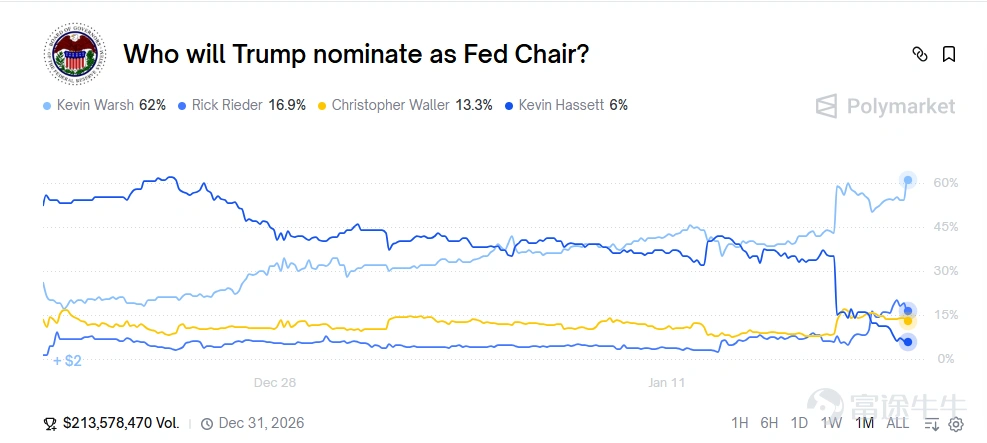
  • Fed Chair Uncertainty: Trump hinted last Friday that Kevin Hassett might not become the new Fed Chair, following Hassett’s repeated calls for the Fed to cut interest rates aggressively. As Hassett likely remains Director of the National Economic Council (NEC), the race has essentially narrowed to a “three-way battle”: BlackRock’s Rick Rieder vs. former Fed Governor Kevin Warsh and current Governor Christopher Waller. The latter two possess extensive central banking experience and represent more traditional choices compared to Rieder’s market-oriented background.
Soochow Securities suggests that in 2026, Trump will exhaust all available political resources—including trade policy under White House authority, fiscal policy under Congressional power, and monetary policy via the Fed—to prepare for the final “exam” of his political career: the Midterm Elections.

Trump’s strategy for the midterms consists of three complementary pillars that form the primary trading theme for 2026:

  1. Trade Policy: Trump may escalate tariff conflicts to divert domestic tension, gain votes, pressure the Fed to cut rates, and generate fiscal revenue.
  2. Monetary Policy: A new Fed Chair is expected to take office in May 2026. Markets anticipate “oversized” rate cuts that exceed economic necessity. This “Fed Put” is expected to replace “TACO” as a hedge against tariff shocks, with loose monetary policy boosting the economy and stocks.
  3. Fiscal Policy: Rate cuts and tariffs will provide funding for fiscal expansion. In the second half of 2026, Trump is expected to introduce broad fiscal policies to build momentum for the midterms.

For capital markets, these three policies will weave a combination of recurring tariffs and “double easing” (fiscal and monetary). This may shift the U.S. economy from a soft landing back into expansion, but it also carries significant upside risks for inflation in late 2026 and beyond.

Market Implications:

  • Tariff Volatility: Risk appetite will likely follow a mean-reversion, “sell high, buy low” strategy.
  • Double Easing: Global equities, commodities, and other risk assets will benefit from the dual tailwinds of liquidity and fundamentals on an annual basis.
  • Fed Leadership Change: Excessive rate cuts may lead to lower U.S. interest rates and weakened credit, favoring Gold while putting downward pressure on the US Dollar Index and 2-year Treasury yields. Combined with fiscal expansion, the 10-year Treasury yield is expected to remain volatile.

Which Opportunities Deserve Close Attention in the Trump Era?

Since taking office, Trump’s every word and action has deeply influenced the U.S. market. Insight into and alignment with government investment logic is not just about capturing opportunities—it is a necessary strategy for risk mitigation.

Market consensus suggests that the following four sectors—Resources, Power/Energy, Space Exploration, and Semiconductors—are most likely to benefit from the “Trump 2.0” era.

Specific Companies to Watch:

  • Semiconductors: Nvidia (NVDA), Broadcom (AVGO), AMD (AMD), Micron (MU).
  • Rare Earths: MP Materials (MP), TMC the metals (TMC), USA Rare Earth (USAR), Critical Metals (CRML).
  • Lithium: Rio Tinto (RIO), SQM (SQM), Albemarle (ALB), Lithium Americas (LAC).
  • Uranium: Cameco (CCJ), Uranium Energy (UEC), Centrus Energy (LEU), Energy Fuels (UUUU).
  • Copper: Southern Copper (SCCO), Freeport-McMoRan (FCX).
  • Graphite: NOVONIX (NVX), Nouveau Monde Graphite (NMG), Westwater Resources (WWR).
  • Antimony/Beryllium: Nova Minerals (NVA), United States Antimony (UAMY), Materion (MTRN).
  • Space Exploration: Rocket Lab (RKLB), AST SpaceMobile (ASTS), EchoStar (SATS.US), GE Aerospace (GE), RTX Corp (RTX), Boeing (BA), Lockheed Martin (LMT).
  • Nuclear Power: Oklo Inc (OKLO), BWX Technologies (BWXT), NuScale Power (SMR), NANO Nuclear Energy (NNE).
  • Batteries/Storage: Tesla (TSLA), Bloom Energy (BE), QuantumScape (QS), Eos Energy (EOSE).
  • Grid & Storage: GE Vernova (GEV), Vistra Energy (VST.), AES Corp (AES), Fluence Energy (FLNC).

Additionally, Morgan Stanley released a “National Security Index” focusing on four key areas: Rare Earths & Strategic Metals, Batteries & Energy Storage, Lithium, and Nuclear & Uranium. These companies are the core drivers of the currently trending “Trump Trade.”
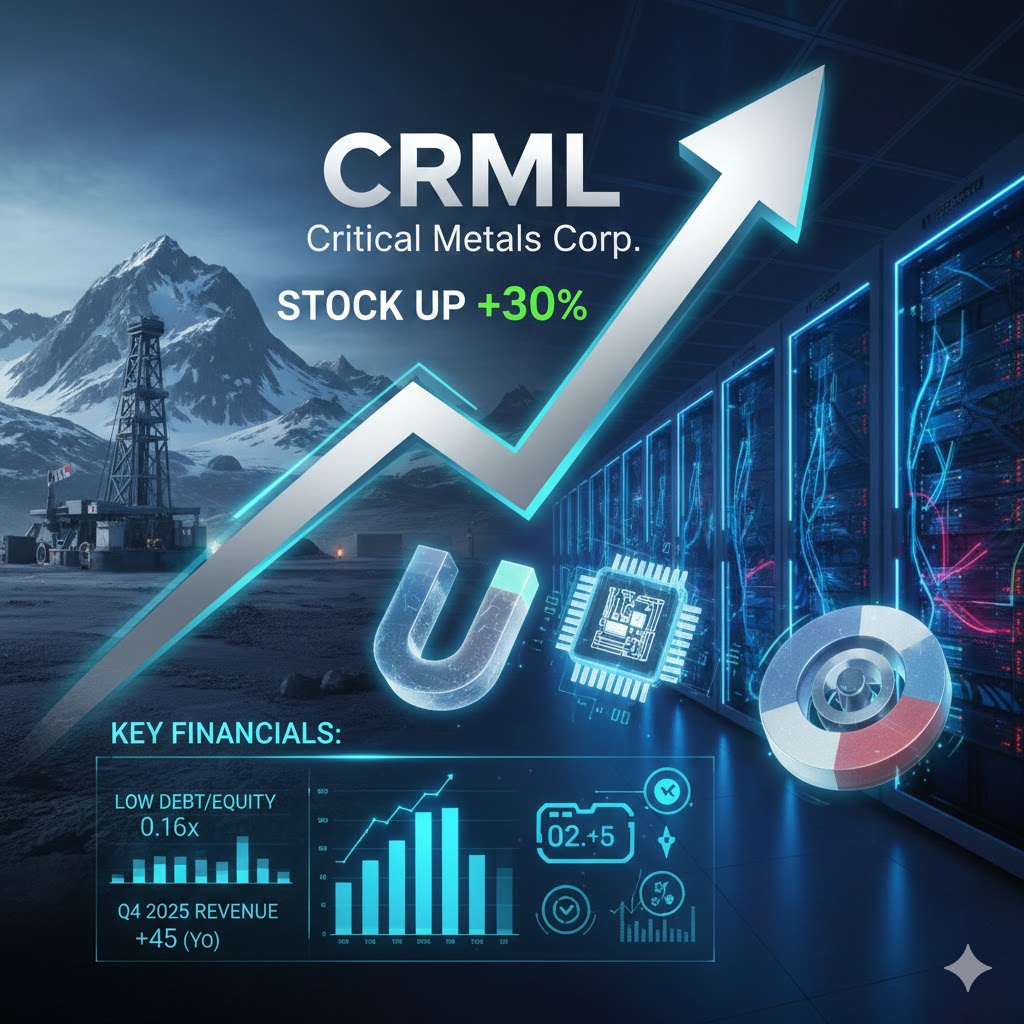
The Greenland Strategic Pivot: Why Critical Metals Corp (CRML) Stock is Surging Amid Trump’s New Mineral Mandates and Chip Tariffs

The landscape of American industrial policy underwent a seismic shift on Wednesday, January 14, as President Donald Trump convened a high-stakes signing ceremony at the White House. The implications of this event have rippled through the global markets, but perhaps nowhere as intensely as in the valuation of Critical Metals Corp (NASDAQ: CRML). As the administration moves to codify its “America First” strategy regarding high-tech infrastructure and resource independence, CRML stock has emerged as a primary vehicle for investors looking to capitalize on the new geopolitical reality. The subsequent movement in the CRML stock price reflects a complex convergence of trade protectionism, national security mandates, and a desperate race to secure the rare earth elements essential for the Artificial Intelligence (AI) revolution.

The Double Catalyst: Rare Earths and AI Protectionism

The primary driver behind the fact that CRML stock surged sharply this week lies in two distinct but interconnected executive actions. First, a senior White House official confirmed that President Trump has signed a landmark executive order regarding critical minerals. This order is designed to bypass traditional bureaucratic hurdles and fast-track the domestic and “near-shore” supply of rare earth elements (REEs). For a company like Critical Metals Corp, which controls the Tanbreez Rare Earth Project in South Greenland—one of the largest REE deposits globally—this executive order is effectively a state-sponsored tailwind. By designating these minerals as a “matter of supreme national urgency,” the administration is signaling that projects within the U.S. sphere of influence will receive unprecedented regulatory and potentially financial support.

Second, the market was jolted by the President’s announcement of a new tariff regime targeting the semiconductor industry. Trump clarified that following the conclusion of a sweeping tariff investigation, a 25% duty will be imposed on chips imported into the U.S. that are not destined for domestic AI development. Specifically, these tariffs target chips that “transit” through the United States to be integrated into data center servers and other products meant for re-export. “We’re going to get 25% on those chips as they sell,” Trump stated on Wednesday, projecting billions of dollars in new federal revenue. This “tax on transit” creates a massive incentive for hardware manufacturers to keep their supply chains and final assembly within U.S. borders. For Critical Metals Corp stock, this means the demand for the raw materials used in high-end magnets, sensors, and cooling systems—all vital for domestic AI server production—is expected to skyrocket as companies pivot to avoid these punitive duties.

Fundamental Strength: Inside Critical Metals Corp (CRML)

While the headlines provided the spark, the fundamental positioning of Critical Metals Corp (CRML) stock provides the fuel. To understand the long-term potential, one must look beyond the immediate price action and into the company’s operational roadmap. The Tanbreez project is not merely another mining site; it is a multi-generational asset. According to the company’s latest technical reports, the site contains an estimated 4.7 billion tonnes of eudialyte-bearing ore. Crucially, it is rich in heavy rare earths like dysprosium and terbium, which are the “secret sauce” for the permanent magnets used in the high-performance motors and AI hardware that the Trump administration is so keen to protect.

From a financial perspective, the most recent CRML stock price appreciation is supported by a strengthening balance sheet. In its latest quarterly filing, the company revealed a significant reduction in long-term debt and a successful capital raise of $50 million through private placements with institutional investors who specialize in strategic resources. This capital infusion has been earmarked for the “Greenland Fast-Track” program, which aims to accelerate the transition from exploration to active extraction. The company’s low debt-to-equity ratio of 0.16x stands in stark contrast to many of its peers in the junior mining sector, providing it with the fiscal “dry powder” needed to weather market volatility while scaling operations.

Business Development and Product Evolution

The evolution of Critical Metals Corp from a junior explorer to a strategic partner for Western OEMs is well underway. The company’s business development strategy is currently focused on the “Mine-to-Magnet” vertical integration. Rather than simply shipping raw ore to be processed in facilities controlled by foreign adversaries, CRML has entered into advanced memoranda of understanding (MOUs) with several European and North American mid-stream processors.

One of the most exciting aspects of their new product development is the “Arctic-Grade Concentrate.” By leveraging proprietary separation technologies, CRML is working to produce a high-purity concentrate that can be fed directly into Western refineries. Recent pilot plant tests in late 2025 showed a 15% improvement in recovery rates for magnet-grade oxides. This technical progress is vital; as the 25% tariff on non-domestic chips takes effect, U.S. manufacturers will be looking for “clean” and “efficient” raw material streams that can be certified as “Trump-Tariff Compliant.” This gives Critical Metals Corp stock a unique competitive edge in the marketplace.

Market Expansion and Geopolitical Synergy

The market expansion of Critical Metals Corp is intrinsically tied to the deepening relationship between the U.S. and Greenland. The White House’s focus on the Arctic region as a strategic mineral hub has turned Tanbreez into a focal point of U.S. diplomacy. Unlike REE projects in mainland Asia, the Greenland project offers a stable, pro-Western jurisdiction. The company’s market development team has been aggressive, recently opening a liaison office in Washington D.C. to better align its production schedule with the U.S. Department of Defense’s stockpiling requirements.

As CRML stock surged sharply, analysts noted that the company is also diversifying its customer base. Beyond the semiconductor and AI server markets, CRML is in talks with major electric vehicle (EV) manufacturers who are similarly concerned about the 25% tariff on transit components. By positioning itself as the “guarantor of the North Atlantic supply chain,” Critical Metals Corp is moving toward a valuation that reflects both its mineral wealth and its strategic utility.

Data-Driven Outlook: Evaluating the CRML Stock Price

For investors tracking the CRML stock price, the technical indicators are as compelling as the fundamental ones. Following the White House ceremony, the stock broke through a major resistance level at $12.50 on massive volume—nearly five times the 30-day average. This indicates strong institutional accumulation. The Relative Strength Index (RSI) has entered the “overbought” territory, but in the context of a “regime change” in trade policy, such technical extensions are often the prelude to a new, higher trading range.

Furthermore, the company’s projected 2026-2027 revenue models—contingent on the successful commissioning of the Qaqortoq pilot plant—suggest a potential 200% increase in net asset value (NAV). When compared to the current market capitalization, the Critical Metals Corp stock appears to be trading at a significant discount to its peer-group median, especially when accounting for the “security premium” now being applied to Western-based rare earth assets.

Conclusion: A New Era for Strategic Commodities

The events of January 14 have made one thing clear: the era of “just-in-time” globalized supply chains is being replaced by “just-in-case” nationalized supply chains. President Trump’s dual-pronged attack—securing critical minerals through executive orders and protecting the domestic AI industry with 25% transit tariffs—has created a “perfect storm” for Critical Metals Corp.

While the volatility of the mining sector always requires caution, the convergence of high-grade drilling results, a robust balance sheet, and a geopolitical mandate from the highest office in the land suggests that the recent surge in CRML stock is more than just a temporary spike. It is the market’s realization that in the AI-driven economy of the late 2020s, the company that controls the minerals controls the future. As the CRML stock price continues to react to these seismic policy shifts, it remains a bellwether for the success of the American effort to reclaim its industrial and technological sovereignty.