In the wake of one of the largest industrial restructurings in recent U.S. corporate history, GE Vernova Inc. (NYSE: GEV) has emerged as a core pillar of the global energy landscape. Spun off from General Electric in April 2024, GE Vernova has quickly established itself as a standalone energy technology leader with a diversified portfolio spanning power generation, electrification infrastructure, wind energy, and advanced energy solutions.
I. GEV Stock Price Snapshot and Market Performance
At the time of the latest available data, GEV stock price has shown notable volatility and sustained performance as the company transitions from a former division of General Electric to a major listed energy player. The stock is trading in the $620–$680 range, with a recent close around $623–$628 per share reported and high trading volumes indicative of broad investor interest.
Across the 52-week range, GE Vernova has traded from a low in the $247 range to highs surpassing $677, reflecting both the opportunities and uncertainties inherent in its early public life. Analysts in late 2025 revised the expected one-year price target to an average near $765.71/share, representing upward sentiment from many institutional forecasts — though individual analyst views range widely from the low $400s to above $1,050 based on differing views of energy sector growth and modular reactor commercialization.
Over recent months, the GEV stock performance has included both significant rallies and pullbacks, influenced by broader macroeconomic trends, energy demand dynamics, and evolving corporate guidance on revenue and profitability.

II. Financial Statements: Revenue, Profitability, and Balance Sheet Dynamics
Revenue Growth and Income Performance
GE Vernova’s financial journey since spin-off reflects both early volatility and emerging scale. According to company filings, for the full fiscal year 2024 — its first as an independent public company — GE Vernova achieved total revenue of approximately $34.94 billion, up about 5% year-over-year, driven by increased services and equipment volumes across multiple segments.
Dollar-for-dollar quarterly results have also shown solid progression. In Q3 2025, the company reported approximately $10.0 billion in revenue, representing roughly 12% annual growth and 10% organic growth — a meaningful expansion in the context of the broader industrial and manufacturing cycle.
Net income has displayed positive momentum as well. After a year of restructuring losses in some earlier quarters, net income figures for 2024 and 2025 indicate profitability expansion; the most recent data show net income around $452 million for the September 2025 quarter, with a net profit margin of about 4.5%.
Profitability Metrics
Despite its enormous scale, GE Vernova’s profitability ratios suggest a capital-intensive business with relatively thin margins compared to some tech or pure service sectors. Trailing net profit margins run near 4–5%, and broader profitability metrics like return on assets (ROA) hover in the low single digits — typical for heavy industrial manufacturing and energy equipment producers but highlighting room for margin enhancement through operational efficiencies and product mix optimization.
Gross and operating margins improved in 2024 and 2025 partly due to price increases and productivity gains in core equipment and electrification services. Total revenues climbed alongside increased order backlogs — significant for forecasting future top-line recognition.
Balance Sheet Strength and Capital Position
GE Vernova’s balance sheet reveals total assets of roughly $54.4 billion against liabilities near $44.7 billion, leaving equity near $9.7 billion — indicative of a robust industrial balance sheet for a recent spin-off. Cash and short-term investments remain strong, reported above $7.5 billion, offering substantial liquidity to support operations, capital expenditures, and growth initiatives.
Notably, the company carries minimal debt relative to asset scale — a testament to the legacy balance sheet strength it inherited from its parent and early focus on disciplined financial management.
III. Business Development, Strategic Direction, and Corporate Purpose
Evolution as a Standalone Energy Leader
GE Vernova’s identity and business strategy are deeply rooted in its century-plus heritage as part of General Electric’s energy businesses, now sharpened into a purpose-driven, standalone energy technology company. GE Vernova’s mission centers on accelerating electrification and decarbonization while providing reliable, affordable energy infrastructure worldwide.
Headquartered in Cambridge, Massachusetts, and employing approximately 75,000 people across roughly 100 countries, the company is organized into three core segments that reflect energy infrastructure’s broad scope:
- Power — gas, nuclear, hydro and steam technologies for electricity generation.
- Wind — onshore and offshore wind turbines and blades.
- Electrification — grid solutions, power conversion, and digital energy systems.
These segments collectively address the full spectrum of modern energy needs — from traditional and flexible fossil-fuel power generation to the renewable wind and advanced grid technology necessary for integrating distributed energy.
Leadership and Organizational Focus
Under CEO Scott Strazik and Chairman Steve Angel, GE Vernova has prioritized scalable energy solutions that address both immediate electricity demand and long-term decarbonization goals. This includes significant emphasis on gas turbine technologies capable of powering data centers and national grids, advanced electrification infrastructure, and long-term nuclear innovations such as small modular reactors.
This strategic positioning allows the company to leverage its deep engineering heritage while addressing some of the most urgent industrial and climate-related challenges facing global energy markets.
IV. Product Innovation, Peak Projects, and Technological Development
GE Vernova’s product pipeline and technological progress extend across several major energy domains:
Power Generation and Gas Turbine Leadership
The Power segment remains at the core of GE Vernova’s revenue engine, producing heavy-duty and aeroderivative gas turbines alongside services for existing gas and steam fleets. Its technology has a broad range of applications — from utility grids to industrial facilities and large data centers requiring reliable, continuous power.
Recent projects — such as multi-unit aeroderivative gas turbine installations serving data centers and industrial complexes — showcase the company’s ability to scale power solutions for modern energy demands, including high-efficiency turbines and flexible fuel offerings.
Wind Energy: Challenges and Progress
GE Vernova’s Wind segment continues to serve a critical role in the global energy transition but has encountered execution challenges. Prior disruptions related to offshore wind turbine blade quality and project delays contributed to operational losses and reduced order intake, forcing the company to recalibrate its wind strategy.
Despite these headwinds, the company maintains a substantial installed base with tens of thousands of wind turbines globally, and activities continue in selective wind projects supported by improved manufacturing controls.
Electrification and Decarbonization Tools
Perhaps the most forward-looking part of GE Vernova’s portfolio, the Electrification segment includes grid solutions, power conversion technologies, and digital software platforms critical to modern energy infrastructure. These technologies support utility and industrial partners in integrating distributed energy resources, managing grid stability, and reducing overall carbon intensity.
Nuclear and Small Modular Reactors
In collaboration with GE Vernova’s joint venture GE Vernova Hitachi Nuclear Energy, the company is advancing small modular reactors (SMRs) such as the BWRX-300, designed for passive-safety, factory-built nuclear power. While commercial deployment timelines remain long-dated relative to traditional energy assets, nuclear innovations represent a strategic play in future carbon-free baseload energy.
V. Market Expansion and Global Footprint
Broad Industrial Reach and Market Penetration
Since its establishment, GE Vernova has leveraged global sales networks and historical legacy relationships to expand into diversified markets — including utilities, industrial customers, governments, and energy developers. With operations and customers spanning major continents, the company plays a role in decarbonization and energy reliability strategies worldwide.
Strategic Manufacturing Investments
Significant investments in manufacturing capacity — such as expanded generator assembly operations in Schenectady, New York — illustrate the company’s commitment to deepening industrial presence and enhancing production capabilities for key power infrastructure products. This expansion, backed by nearly $130 million in cumulative capital and job growth initiatives, positions GE Vernova to better meet future global demand.
Backlog Expansion and Order Growth
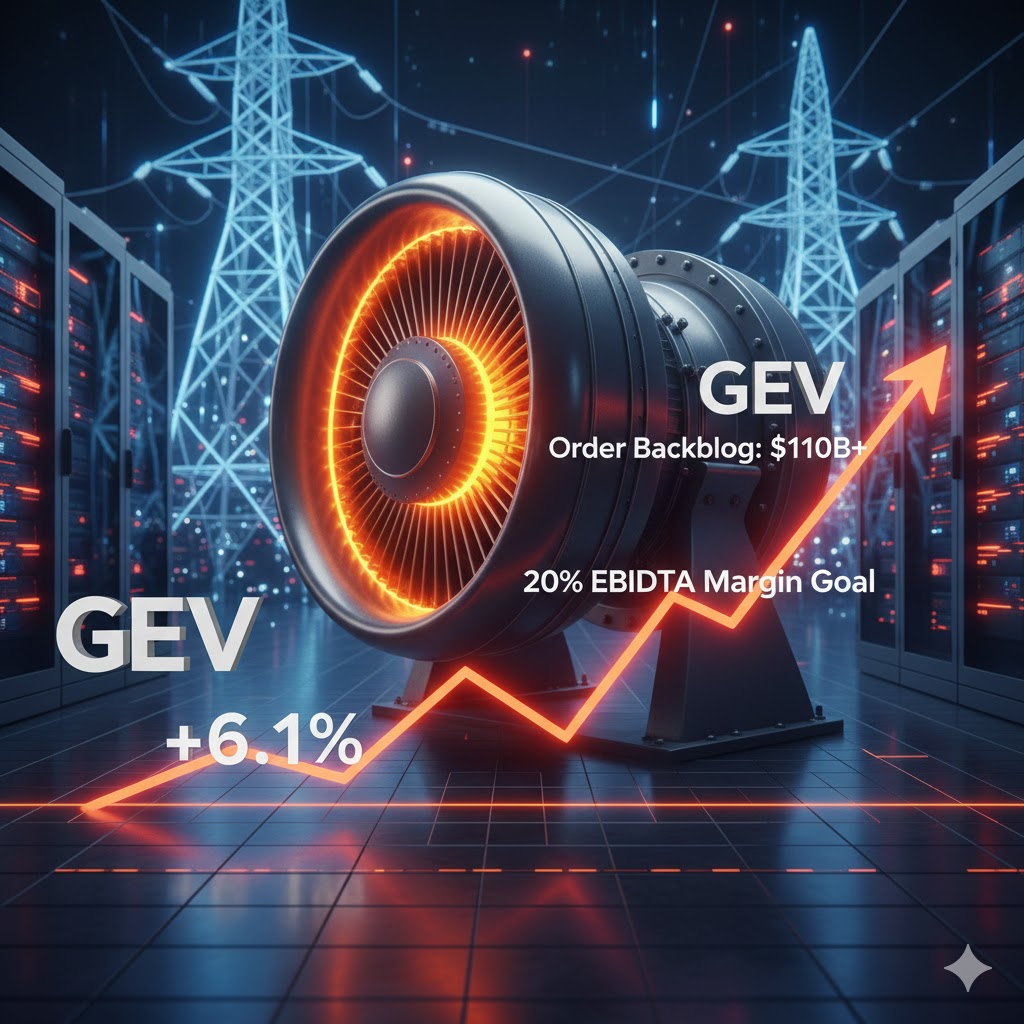
Strong order backlogs, particularly in the Power and Electrification segments, reflect sustained demand for advanced energy equipment. In Q3 2025, GE Vernova reported an equipment and services order backlog surpassing $14.6 billion, with significant sequential organic growth.
Backlog strength is a vital forward-looking indicator for revenue recognition in future quarters and underscores the company’s capacity to sustain top-line growth.
VI. Other Important Events and Corporate Developments
Dividend and Buyback Enhancements
In late 2025 and early 2026, GE Vernova doubled its quarterly dividend to $0.50 per share and expanded its share buyback program to $10 billion, reflecting confidence in cash flow generation over multi-year horizons. These capital return initiatives are notable given the company’s historical capital intensity and industrial spend.
Analyst Sentiment and Stock Recognition
Following strong performance drivers in core segments, Wall Street analyst groups have revised forward targets for GEV stock upwards, indicating belief in underlying demand for energy infrastructure and the company’s strategic pivot toward reliable energy solutions in a decarbonizing world.
VII. Forward Outlook: Opportunities and Structural Growth Vectors
Energy Demand and Electrification Trends: As global electricity demand increases — particularly from data centers, industrial electrification, and electrified transportation — GE Vernova’s diversified product set positions it to capture long-term growth in both traditional and emerging energy markets.
Decarbonization Imperatives: Governments and utilities worldwide continue to invest in cleaner energy infrastructure. GE Vernova’s combined power generation, grid solutions, and decarbonization technologies — including electrification products and next-generation nuclear reactors — align with multi-decade energy transition frameworks.
Backlog Conversion and Margin Expansion: Sustained conversion of robust backlogs into recognized revenue, coupled with productivity initiatives and cost discipline, could enhance profitability margins.
Segment Outlook and Wind Sector Recovery: Continued focus on performance improvements in wind segment execution will be important for capturing renewable project demand; meanwhile, gas turbine and electrification technologies provide a near-term revenue cushion as wind undergoes recalibration.
Conclusion: GE Vernova’s Strategic Position in the Energy Landscape
GE Vernova’s emergence as an independent energy infrastructure company has been accompanied by strong revenue growth, meaningful order backlogs, expanding global presence, and an evolving product portfolio tailored to today’s energy challenges. The GEV stock price reflects a blend of investor enthusiasm for energy transition narratives and market recognition of the company’s foundational industrial strengths. Through diversified segments — including Power, Electrification, and Wind — and innovations such as small modular nuclear reactors, GE Vernova is positioning itself at the intersection of traditional and future-oriented energy solutions.
From financial performance anchored in multi-billion-dollar revenue streams to strategic manufacturing investments and global order backlogs, GE Vernova exemplifies how legacy energy businesses can reinvent themselves for a decarbonizing, electrifying future. While inherent industry cyclicality and execution risks remain, the company’s balanced approach to innovation, manufacturing scale, and market penetration suggests a robust platform poised for long-term relevance. For those following GE Vernova stock fundamentals, the integration of financial results, strategic direction, and macro energy trends offers a comprehensive view into what this industrial powerhouse seeks to achieve in the coming decade — even as it navigates the complex global energy transition ahead.