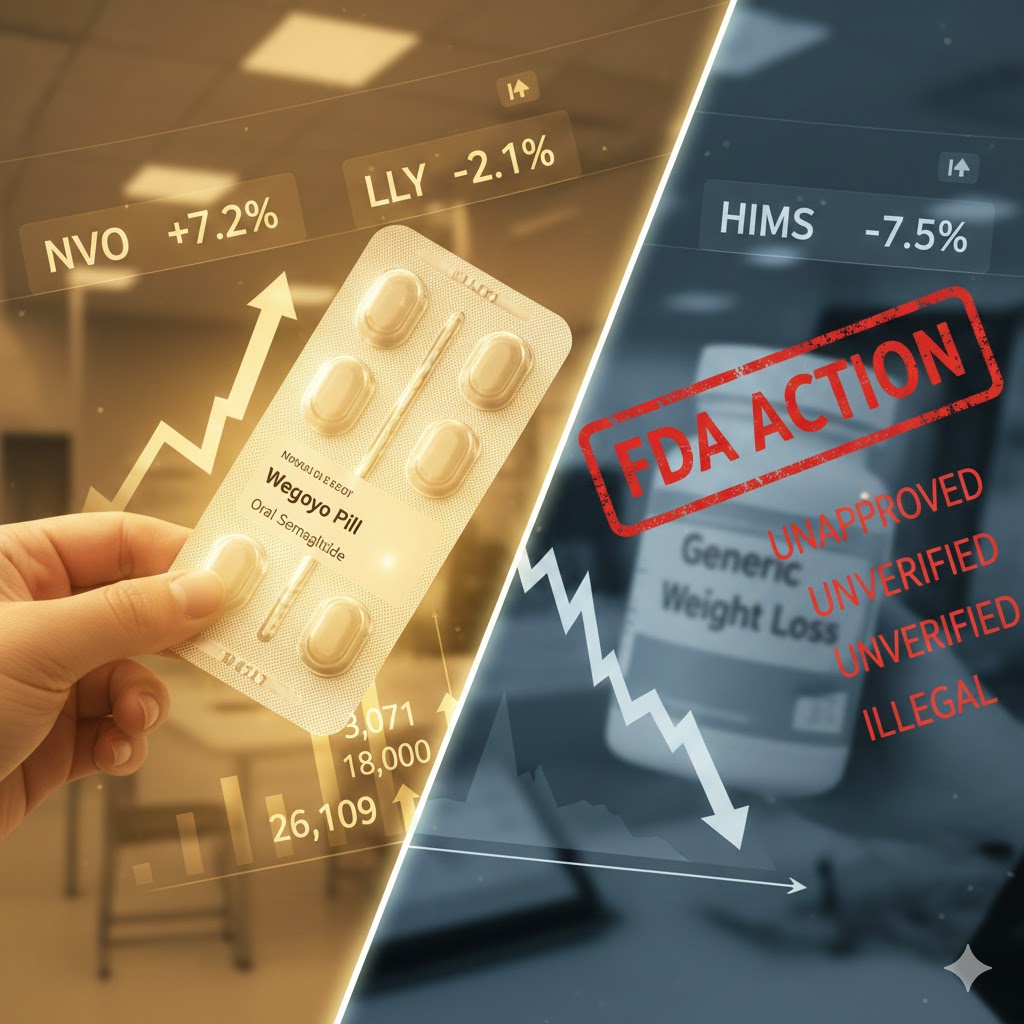
Shares of the Denmark-based global pharmaceutical giant Novo Nordisk (NASDAQ:NVO) rose over 7%, as the U.S. Food and Drug Administration (FDA) pledged to take action against the large-scale marketing of unapproved generic weight loss pills. This helped the stock recover some of the losses from the previous two trading days. Eli Lilly (NYSE:LLY) also bounced back, rising over 2% after a nearly 8% drop the day before.
Hims & Hers Health (NYSE:HIMS) fell more than 7%.
On Thursday, the U.S. telehealth company Hims & Hers Health launched a significantly cheaper $49 generic version of Wegovy, a weight loss drug approved by the FDA and produced by Novo Nordisk. This move triggered a decline in the stock prices of both Novo Nordisk and Eli Lilly, which have dominated the weight loss drug market.
FDA Commissioner Marty Makary posted on social media platform X, stating, “The FDA will swiftly act against companies that are massively marketing illegal generic weight loss drugs, claiming their products are similar to FDA-approved ones.” He did not name any specific companies but added, “The FDA cannot verify the quality, safety, or efficacy of unapproved drugs.”
Wegovy Pill, the world’s first oral macromolecule drug—oral semaglutide for weight loss—was launched in the U.S. at the beginning of this year. After being released on January 5, it quickly became a star product in the local obesity market, with prescriptions soaring from 3,071 in the first four days to over 18,000 by the week of January 16. By the week of January 23, prescriptions had further increased to 26,109, showing strong momentum since its launch.
Resistance to injections and greater trust in oral medications is a common psychological tendency among patients with chronic conditions such as obesity and diabetes. Adherence to treatment is a critical factor in achieving effective results.
On February 5, U.S. pharmaceutical company Eli Lilly (NYSE:LLY) released an optimistic full-year sales forecast, further solidifying its leading position in the obesity treatment market driven by strong demand for its weight loss drugs.
This forecast stands in stark contrast to its competitor Novo Nordisk. On Tuesday, Novo Nordisk warned investors that its sales could fall by as much as 13% this year due to increased price competition in the weight loss drug market. In contrast, Eli Lilly expects its sales to grow by up to 27%.
During U.S. stock market trading, Eli Lilly’s shares surged over 10%, while Novo Nordisk dropped more than 5%, following a 12.56% decline on the previous trading day.
Currently, the demand for weight loss drugs is robust, and both Eli Lilly and Novo Nordisk are facing competition from telemedicine companies offering cheaper generic versions. Additionally, President Trump has prioritized lowering drug prices, and both companies have agreed to provide lower-cost options.
Compared to Novo Nordisk, Eli Lilly is in a relatively more favorable position, as its blockbuster drugs — Mounjaro for diabetes and Zepbound for obesity — still have around ten years of patent protection remaining.
Meanwhile, some of Novo Nordisk’s drugs are expected to face generic competition in certain countries as soon as this year.
Mizuho Securities analyst Jared Holz said, “This further demonstrates that Eli Lilly is leading in this field. Novo Nordisk is playing catch-up, and everyone knows it.”
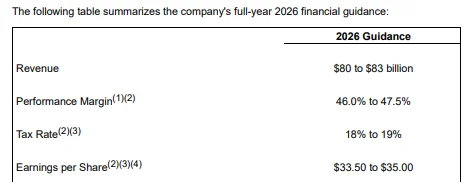
Eli Lilly expects its 2026 full-year sales to be between $80 billion and $83 billion, higher than Wall Street’s average expectation of $77.7 billion. The company also expects adjusted earnings per share in 2026 to be between $33.50 and $35, above analysts’ estimate of $33.08.
Eli Lilly also anticipates that the obesity drug market will continue to expand this year, as the Trump administration has agreed to include these drugs in the U.S. federal Medicare coverage, benefiting more senior patients.
The company is also waiting for approval of its oral weight loss drug, which could be launched as early as April. Novo Nordisk has already launched its oral weight loss drug this year with strong initial performance. Eli Lilly is preparing to follow suit quickly, having already produced billions of doses of its oral drug before it is approved for sale.
In addition, Eli Lilly has introduced a multi-dose version of its weight loss injection Zepbound, which has helped the company reach an agreement with the Trump administration. On January 20, the FDA approved Eli Lilly to sell a new device that provides a one-month dose.
Eli Lilly CFO Lucas Montarce stated that the company plans to launch the multi-dose injection pen within the next 30 days. This product will be available to Medicare patients and also sold directly to consumers through Eli Lilly’s direct sales platform.
BMO Markets analyst Evan Seigerman noted that despite the price pressure facing the entire industry, Eli Lilly retains a relative advantage due to its current and pipeline drug portfolio. “While Eli Lilly and Novo Nordisk are competing in the same market, the pressures they face are not identical.”
Eli Lilly is also testing a next-generation weight loss drug in multiple indications. For example, its weight loss injection retatrutide is undergoing clinical trials for obesity, cardiovascular disease, chronic kidney disease, and other related conditions.
Last December, the company stated that this drug could help patients lose nearly a quarter of their body weight, potentially becoming the most effective weight loss drug to date.
The company has also launched new research on brenipatide, an experimental drug that mimics the hormone mechanism of Zepbound, with indications covering tobacco dependence, bipolar disorder, and asthma. It was previously used in alcohol dependence research.
Unlike Novo Nordisk, which is highly focused on diabetes and obesity, Eli Lilly’s product portfolio also covers areas such as neuroscience, immunology, and oncology.
In 2024, the company will receive approval for a new Alzheimer’s drug called Kisunla and is conducting research on another experimental drug, remternetug, with results expected later this year.
Eli Lilly stated that global drug prices are expected to decrease by “low to mid-single digits” to a few percentage points this year, partly due to agreements with the U.S. government to lower prices and the introduction of new cash payment pricing strategies.