In the high-stakes, high-reward sector of emerging gold producers, few companies have managed to maintain a trajectory as sharp and disciplined as TRX Gold Corporation (NYSE: TRX). On December 2, 2025, the company unveiled its TRX Gold Financial Report for the fourth quarter and full fiscal year 2025, providing a definitive roadmap for its transition from a boutique miner to a high-capacity industry player. Against a backdrop of historic gold prices and shifting global demand for “safe-haven” assets, TRX Gold’s results were not merely a reflection of market tailwinds, but a masterclass in operational efficiency and strategic infrastructure scaling. For investors dissecting TRX Gold stock, the Q4 release offered a compelling narrative: a record-breaking revenue beat and a massive expansion of processing capacity that effectively “de-risks” the company’s ambitious 2026 production targets.
The Numerical Vanguard: Deconstructing the Q4 2025 Revenue Surprise
The core data within the TRX Gold Earnings release for the period ending August 31, 2025, was defined by a spectacular outperformance in top-line revenue. TRX Gold reported Q4 revenue of $23.5 million, a staggering 61.7% surprise over the analyst consensus of $14.53 million. This performance was anchored by the sale of 6,977 ounces of gold—a quarterly record for the company—at a record average realized price of $3,363 per ounce. To put this in perspective, the realized price in the same quarter of the previous year was approximately $2,412, illustrating the company’s perfect positioning to capture the upward surge in the global gold market.
However, the report was a study in contrasts when it came to profitability. While revenue soared, the company reported a GAAP earnings per share (EPS) of $0, missing the forecasted $0.025. This “earnings miss” despite the revenue “beat” can be traced directly to a calculated strategic decision: the “scheduled strip campaign.” During the first half of fiscal 2025, TRX Gold significantly increased its waste rock removal to access higher-grade ore blocks in the main Buckreef pit. This front-loaded cost structure, combined with increased cash costs of $1,530 per ounce compared to $1,103 in the prior year, temporarily compressed net income. But for those analyzing the long-term value of TRX stock, this was an investment in the future. By clearing the path to richer gold deposits, the company paved the way for the record pours seen in the latter half of the quarter and the robust production trends continuing into 2026.
The Mill Expansion: Scaling the 3,000 TPD Threshold
A central pillar of the TRX Gold Financial Report is the company’s aggressive infrastructure roadmap. The Buckreef Gold Project in Tanzania has undergone a series of rapid mill expansions that have transformed the site from an experimental operation into a 2,000 tonnes per day (TPD) powerhouse. During the Q4 conference call, CEO Stephen Mullowney confirmed that the company is already advancing toward a 3,000 TPD throughput target.
This expansion is the primary driver behind the company’s ability to lower its processing costs per tonne, which decreased from $20.07 in FY2024 to $14.90 in FY2025—a 25% improvement in efficiency. By scaling the mill, TRX Gold is achieving economies of scale that allow it to remain profitable even if gold prices were to revert to more conservative levels. Furthermore, the procurement of new “thickener” technology and elution plant upgrades is expected to push gold recovery rates even higher than the currently impressive 94-95%. For investors monitoring TRX Gold stock, the transition from 2,000 to 3,000 TPD represents a “step-change” in the company’s valuation, moving it from a “junior” classification into the realm of “mid-tier” emerging producers.
The company’s “Run of Mine” (ROM) stockpile also serves as a critical financial buffer. At the end of the fiscal year, the stockpile had grown to over 20,000 ounces of contained gold. This is essentially “gold in the bank”—ore that has already been mined and is ready to be processed. This stockpile provides TRX Gold with the flexibility to manage its cash flow independently of daily mining conditions, ensuring a steady stream of revenue regardless of seasonal weather patterns or temporary equipment maintenance cycles.
Tanzania: A Strategic Advantage in the Guerrero Gold Belt
The geographical context of TRX Gold’s operations is often undervalued by the broader market. Operating in the Lake Victoria Greenstone Belt of Tanzania, TRX Gold benefits from a jurisdiction that has become increasingly mining-friendly under the current administration. The company’s ability to secure a 17.6-year mine life in its latest Preliminary Economic Assessment (PEA) is a testament to the stability of its local partnerships and the massive untapped potential of the Buckreef site.
The PEA filed in May 2025 outlines a future where Buckreef produces an average of 62,000 ounces of gold per year. When combined with the potential for underground expansion—which TRX Gold is currently exploring via its first high-grade underground drill program—the project’s Net Present Value (NPV) at a 5% discount rate sits at a staggering $1.9 billion. Considering the company’s current market capitalization is significantly lower, this massive NPV suggests that TRX stock is trading at a deep discount to the underlying value of its assets.
Capital Allocation and the Working Capital Turnaround
One of the most encouraging segments of the TRX Gold Earnings report was the dramatic improvement in the company’s liquidity position. Just a year ago, the company’s working capital ratio was a cause for concern among some analysts. However, through disciplined cash management and the windfall from high gold prices, TRX Gold completely repaid its short-term borrowings of $3.0 million during Q4. The adjusted working capital ratio improved from 0.8 on May 31, 2025, to a healthy 1.3 by August 31, 2025.
The company ended the fiscal year with a cash balance of approximately $7.8 million, an increase of $1.2 million sequentially. More importantly, TRX Gold is now funding its own expansion. The $15-$20 million in capital expenditures projected for fiscal 2026 is expected to be primarily financed through operational cash flow, minimizing the need for dilutive equity raises. For those tracking TRX stock price sensitivity to share dilution, this move toward self-sufficiency is a major “green flag” for long-term holders.
Market Sentiment and TRX Stock Price展望
As of January 12, 2026, the TRX stock price is trading at approximately $0.91 on the NYSE American. The stock has experienced a remarkable 187% rally over the past calendar year, climbing from a low of $0.32 as the market began to price in the success of the mill expansion and the “record gold price” environment. Currently, the stock is consolidating near its 52-week high of $1.02, with a Market Cap of approximately $360 million.
From a valuation perspective, TRX stock remains a compelling opportunity for those who believe in the “Supercycle” for gold. While a Price-to-Earnings (P/E) ratio of 386x might appear high at first glance, it is a lagging indicator that doesn’t account for the massive production ramp-up scheduled for 2026. On an EV/EBITDA basis, the company looks far more attractive, given the $22 million in adjusted EBITDA generated in FY2025.
Technically, the TRX stock price has found strong support at the $0.85 level. The “Golden Cross”—where the 50-day moving average crosses above the 200-day moving average—occurred in late 2025 and remains in play. If TRX Gold can deliver another revenue beat in its upcoming Q1 2026 report (scheduled for January 14), the stock could easily challenge the $1.20 resistance level. Conversely, any sustained drop in the spot price of gold below $2,800/oz would likely lead to a retest of the $0.70 support zone.
Conclusion: The Disciplined Path to Mid-Tier Status
The December 2nd TRX Gold Financial Report confirms that the company is no longer just a “story” stock; it is a high-margin, cash-generating machine. By successfully navigating its stripping campaign and doubling down on mill throughput, TRX Gold has built a resilient platform that is highly leveraged to the price of gold. While the 2025 EPS miss was a momentary distraction, the $23.5 million revenue record and the 1.3 working capital ratio are the metrics that truly define the company’s health.
For the investor looking for exposure to the gold sector without the “legacy debt” of senior producers, TRX Gold offers a unique blend of growth and operational agility. As the company marches toward 3,000 TPD and continues to explore its underground potential, the “Million-Ounce Vision” for Buckreef is moving closer to reality. In the world of gold mining, discipline and throughput are king, and TRX Gold is currently wearing the crown in the Tanzanian goldfields.
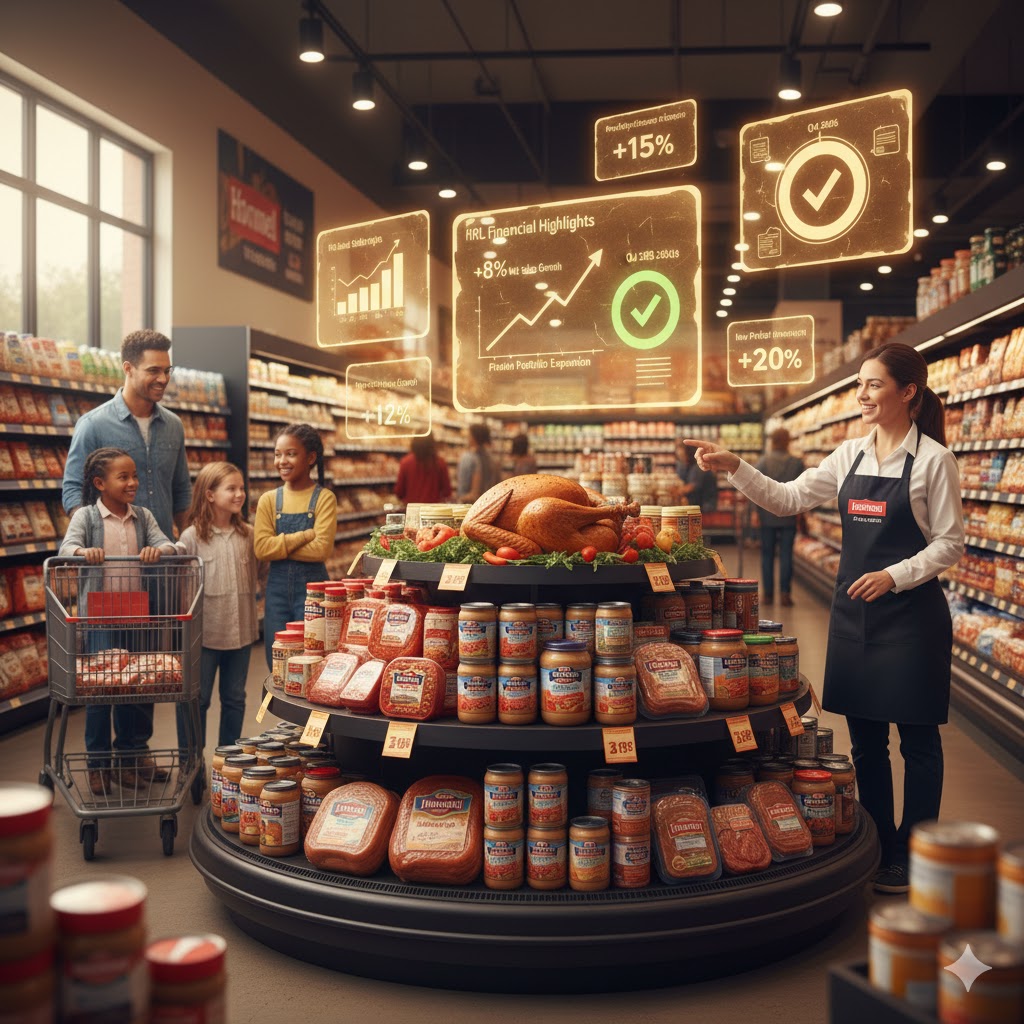
On December 4, 2025, Hormel Foods Corporation (NYSE: HRL) — one of the most venerable names in global branded food products — published its fourth quarter and full‑year fiscal 2025 results, revealing a story of resilient top‑line strength, profitability pressures from commodity inflation, and strategic actions to reshape the earnings trajectory going into fiscal 2026 and beyond. The HRL Financial Report showcases a business at a crossroads: sustained consumer demand for core brands and new products continues to support net sales, yet rising input costs and discrete non‑cash charges weighed heavily on earnings, particularly in the final quarter.
This in‑depth report unpacks the complete financial results, dissects profit trends and segment performance, scrutinizes strategic initiatives such as pricing actions and operational modernization, and assesses how these developments influence expectations for the Hormel Foods stock and broader investor sentiment. Along the way, we examine issues ranging from branded product portfolios and pricing power to supply chain impacts and cost‑management programs — all while integrating latest market data and trends surrounding the HRL stock price.
The HRL Financial Report released on December 4, 2025 showed Hormel Foods finishing fiscal 2025 with both mixed and encouraging data points — strong net sales growth but sharp earnings pressures due to rising commodity costs and one‑off impairments. All comparisons below are against the same period a year earlier unless otherwise noted.
Fiscal 2025 Highlights:
Net sales: Approximately $12.1 billion, with organic net sales up 2% — testimony to broad brand demand and product relevance.
Operating income: ~$719 million; adjusted operating income (excluding certain items) was ~$1.02 billion.
Operating margin:5.9% GAAP; 8.4% adjusted.
Diluted earnings per share:$0.87 GAAP and $1.37 adjusted.
Cash flow from operations:~$845 million — a solid cash generation metric.
Fourth Quarter (Q4 2025):
Net sales: ~$3.2 billion (organic net sales up ~2%).
Operating income: ~$2 million (down sharply), offset by adjusted operating income of ~$245 million.
Operating margin:~0.1% GAAP; ~7.7% adjusted.
Non‑cash impairment charges: ~$234 million related to minority interests and certain intangible assets.
Loss before taxes: ~$22 million on a GAAP basis; adjusted pre‑tax earnings ~$234 million.
Diluted loss per share:($0.10) GAAP; adjusted EPS of ~$0.32.
Cash flow from operations: ~$323 million.
Outlook for Fiscal 2026 Provided by Management:
Net sales: Forecasted between $12.2 billion and $12.5 billion, with organic growth of 1%–4%.
These figures reflect a company that continues to generate stable revenue growth under pressure from cost inflation and one‑off charges, yet expects improved profitability in the year ahead as strategic initiatives take hold. At the moment of publishing, Hormel Foods stock (stock code HRL) was trading near its recent range with a market capitalization around $12.5 billion, and a dividend yield exceeding 5%, reflecting both income‑oriented shareholder appeal and valuation compression in the packaged food sector.
II. Detailed Financial Performance Analysis
Hormel Foods’ fiscal 2025 results reveal a complex interplay between net sales growth, margin compression, impairment and cost pressures, and operational cash flows. To fully understand the implications, we must unpack each component in context.
A. Revenue and Organic Growth: Sustained Demand but Headwinds in Volume
The company reported $12.1 billion in net sales for the full fiscal year, a modest increase from the prior year. Adjusting for divestitures and excluding discrete effects, organic net sales expanded by about 2% — a level of growth that signals that core product demand remains resilient despite a cautious consumer spending environment and elevated grocery inflation.
In the fourth quarter, net sales of ~$3.2 billion were also up on an organic basis, indicating that even at seasonal troughs, the portfolio continued to attract demand. This growth was broad‑based across segments such as retail and foodservice, often supported by categories with strong consumer affinity like turkey products, prepared meats, and snacks. Importantly, sustained demand for protein‑centric offerings — especially the Jennie‑O turkey portfolio and snack nuts — buttressed revenue performance.
However, volume metrics from the detailed financial statements indicate some softness in certain categories when compared year‑over‑year: total volume for the year declined slightly (~2.3%), with the retail segment seeing modest increases in unit sales but foodservice and international volumes showing fluctuations due to competitive pressures and shifting consumption patterns.
The combination of weighted volume shifts and price increases suggests that Hormel is successfully leveraging pricing power in core categories even as input costs have pressed margins — a double‑edged dynamic that will shape Hormel Foods Earnings and broader profitability metrics.
B. Cost Structure, Impairments, and Margin Analysis
A defining feature of the HRL Financial Report for fiscal 2025 was the compression of profitability margins, particularly in the final quarter. On a GAAP basis, operating income collapsed to ~$2 million in Q4 — an extremely low level compared to historic results — while adjusted operating income excluding non‑cash impairment charges and other items stayed much healthier at ~$245 million.
This divergence underscores a key theme: the headline GAAP results were significantly impacted by non‑recurring items including a $234 million impairment related to certain minority investments and intangible assets, which masked underlying operating performance.
When considering adjusted margins, the progression tells a different story. For the full year, adjusted operating margins of ~8.4% point to an earnings profile that is more in line with long‑term trends and reflective of strategic cost management. In contrast, the GAAP operating margin of 5.9% highlights how one‑off impacts and elevated input costs can distort profitability in any given quarter.
Input costs — particularly for pork, beef, turkey, and nuts — were widely noted by management and analysts alike as a major headwind throughout fiscal 2025. Commodity price pressures, especially in meat and nut markets, led to elevated raw material costs that required targeted pricing actions and cost optimization strategies such as the company’s ongoing Transform & Modernize initiative. These pressures were especially acute in the third quarter and extended into Q4, compressing margins and delaying expected recovery in operating profits.
Notably, inventory balances were intentionally built higher in the third quarter in anticipation of input cost fluctuations, which also weighed on gross margins and working capital costs. These strategic inventory actions likely blurred the near‑term earnings picture — even as they aimed to protect supply continuity and stabilize cost exposure over time.
C. Segment Performance and Business Unit Analysis
Hormel Foods operates through multiple segments — Retail, Foodservice, and International — each with distinct dynamics that influence the company’s overall financial profile.
1. Retail Segment
The Retail segment represents the largest portion of Hormel’s revenue, encompassing iconic brands such as SPAM®, Jennie‑O®, Planters®, Applegate®, and others that feature heavily in U.S. grocery channels. In the full year, retail net sales grew modestly, supported by sustained consumer demand for value‑oriented protein products and strong brand recognition.
Retail volume held up relatively well year‑over‑year, with the segment executing strategic pricing actions to offset cost pressures. While segment profit was compressed compared with prior periods — due in part to higher commodity costs and SG&A expenses — the mid to long‑term brand equity and distribution reach provide a buffer against cyclical downturns in consumer spending.
A notable trend is the popularity of turkey and other lean protein products, driven by health‑conscious consumer trends and home meal preparation cycles that have continued post‑pandemic. These dynamics underpin forward‑looking expectations for moderate volume growth and category expansion in retail channels.
2. Foodservice Segment
The Foodservice segment — which supplies to restaurants, hospitality, and institutional customers — also experienced mixed performance. While net sales continued to grow modestly on an organic basis, segment profitability was impacted by input cost inflation and competitive pressures in certain sub‑categories.
Despite these pressures, the foodservice channel benefited from business continuity and customer diversification, with demand for premium pepperoni and customized solutions contributing to revenue resilience. However, margins remained compressed relative to expectations due to lags between pricing actions and cost absorption — a common challenge in foodservice given contracted pricing and volume sensitivities.
3. International Segment
International operations saw volume growth in several markets, including notable performance in certain Asian markets such as China. Yet competitive pressures — particularly in Brazil and other Latin American markets — dampened overall profitability in this segment. Lower pork offal margins and currency dynamics also contributed to segment profit declines, despite net sales gains and volume expansions in select product lines.
International growth remains important to the Hormel Foods Earnings story because it represents a meaningful diversification away from primarily U.S.‑centric retail and foodservice demand. As global protein consumption patterns evolve, especially in Asia, Hormel’s global distribution network and local brand partnerships may yield long‑term growth opportunities.
III. Cash Flow & Balance Sheet Dynamics
A healthy cash flow profile is essential for any consumer staples company that relies on continuous product investment, distribution network maintenance, and shareholder returns.
Hormel reported ~$845 million in operating cash flow for fiscal 2025, demonstrating strong cash generation relative to net earnings and affirming the underlying health of the business. This robust operating cash flow is particularly significant given the margin pressures experienced during the year.
The cash flow statement also shows a $323 million contribution from operating activities in the fourth quarter alone, reflecting seasonal strength and the ability of the company to convert sales into liquidity even during a period of margin erosion.
On the balance sheet front, Hormel maintained a solid current ratio and liquidity position, ending the year with over $670 million in cash and equivalents. While working capital dynamics are influenced by inventory build‑ups and accounts receivable, the company’s conservative leverage and disciplined capital allocation provide financial flexibility to invest in growth initiatives or weather short‑term disruptions.
IV. Strategic Initiatives and Management Commentary
The HRL Financial Report is incomplete without addressing the strategic context in which Hormel operates. Management commentary accompanying the release underscored ongoing efforts to transform and modernize the business — a multi‑year initiative aimed at streamlining operations, enhancing productivity, and deepening brand engagement.
Transform & Modernize Initiative
The Transform & Modernize program — referenced in both third quarter and fourth quarter commentary — involves optimizing manufacturing networks, reducing administrative expenses, and investing in data and digital capabilities to improve end‑to‑end operational efficiency. Management has indicated that this initiative generated measurable results in fiscal 2025, contributing cost savings and operational improvements that help partially offset inflationary pressures.
Actions under this initiative include reallocation of production volumes, partial closures of select facilities for efficiency gains, and targeted workforce adjustments. While these moves incur short‑term charges and restructuring costs (including the impairments noted in the Q4 results), they align with the company’s articulated objective of elevating earnings performance in the medium term.
Management has linked these operational moves with a broader goal of reshaping Hormel Foods’ cost structure and foundation for margin expansion in fiscal 2026 and beyond — a theme highlighted clearly in the December earnings commentary.
Pricing Actions and Input Cost Management
Given the persistent inflationary environment for key commodities — including pork, beef, and nuts — Hormel Foods has implemented pricing actions to mitigate input cost impacts. These actions are a necessary element of preserving profitability in an industry where raw materials represent a large share of cost of goods sold.
While pricing increases may risk some downward pressure on volume in price‑sensitive markets, they also reflect a degree of pricing power that core brands like Jennie‑O, SPAM®, and Planters® possess within their respective categories. Balancing price increases with volume retention will remain a key determinant of margin trajectory in fiscal 2026.
V. Market Reaction and HRL Stock Price Context
At the time of writing, HRL stock price was trading in the low‑$20 range — around $23 per share — with a 52‑week range of approximately $21.03 to $32.07. The stock exhibits significant volatility relative to its historical range, due in part to macroeconomic headwinds, rising input costs, and investor concerns about profitability trends in the consumer staples sector.
Despite recent performance challenges and margin compression, analysts continue to view the Hormel Foods business as fundamentally stable, with a forward P/E ratio that is notably below many consumer staples peers and a dividend yield exceeding 5%, making it attractive to income‑oriented investors.
News coverage following the December 4 earnings release indicated that while net sales slightly missed top‑line expectations in the fourth quarter, adjusted earnings per share of ~$0.32 beat analyst estimates, leading to a positive pre‑market reaction in HRL stock on the day of announcement.
However, broader sentiment has been weighed down by elevated commodity costs, evolving consumer preferences toward healthier and often less processed food alternatives, and cautious guidance for near‑term profitability. These forces help explain why Hormel Foods stock has underperformed broader market benchmarks despite its status as a Dividend King — a title reflecting decades of consecutive annual dividend increases.
VI. Competitive Landscape, Risks & Long‑Term Prospects
Hormel Foods operates in a highly competitive packaged foods industry, facing rivals ranging from Tyson Foods and Kraft Heinz to smaller regional processors with leaner cost structures. In this environment, pricing power, brand equity, distribution reach, and supply chain execution are central determinants of success.
Primary risks for HRL include:
Commodity price volatility: persistent inflation in pork, beef, poultry, and nuts can compress gross margins if not fully passed through to consumers.
Shifting consumer preferences: increasing demand for fresh, organic, and plant‑based alternatives may dampen demand for traditional processed products.
Global supply dynamics: disruptions in key geographies or export markets can affect international revenue streams.
However, Hormel’s brand portfolio — including SPAM®, Jennie‑O®, Planters®, Skippy®, and others — remains deeply embedded in consumer culture, supporting its ability to maintain shelf space and market presence. The company’s diversification across retail, foodservice, and international channels also provides resilience against localized downturns.
VII. Looking Ahead: Trajectories for Revenue, Earnings & Stock Trends
The outlook for Hormel Foods Earnings and HRL stock price will be shaped by how effectively the company addresses cost pressures while maintaining volume and pricing in profitable segments. Management’s fiscal 2026 guidance — with expectations of higher adjusted operating income and modest net sales growth — suggests a pathway toward margin recovery and improved earnings performance.
Key trends likely to influence the trajectory include:
Execution of pricing strategy — how well price increases are absorbed without materially deterring demand.
Transformation initiatives — continued operational modernization and cost reduction efforts that improve efficiency.
Brand innovation and market penetration — new product launches and marketing investments aimed at driving category relevance.
International market growth — leveraging global brand footprint in emerging and established markets.
As the company navigates these levers, Hormel Foods stock may continue to reflect investor assessment of risk vs. reward in a packaged foods landscape that blends stable demand with margin sensitivity. Valuation multiple expansion or contraction will likely hinge on clarity around margin trends, consumer behavior shifts, and broader macroeconomic influences such as food inflation and labor costs.
VIII. Conclusion
The December 4, 2025 HRL Financial Report illustrates a business balancing top‑line resilience with bottom‑line challenges. Hormel Foods delivered solid net sales growth and strong operating cash flows, even as profitability faced headwinds due to inflation and discrete impairment charges. Strategic initiatives such as pricing actions and the Transform & Modernize program could serve to unlock improved margins in fiscal 2026 and beyond.
For investors observing HRL stock, the narrative is neither purely bleak nor outright bullish — it is a nuanced combination of enduring brand strength, operational adaptation, cost headwinds, and strategic repositioning. With a solid dividend yield and stable revenue base, Hormel Foods stock remains an important case study in how a legacy consumer staples company adapts to modern cost environments while striving for sustainable profitability.
In aggregate, the fiscal 2025 results position Hormel Foods to leverage its deep brand portfolio and strategic initiatives toward a more favorable earnings outlook in fiscal 2026. The next chapters of this story — including execution of guidance, margin trends, and consumer demand shifts — will play a decisive role in shaping the company’s financial performance and market perception going forward.