The global automotive landscape is witnessing a seismic shift as traditional powerhouses and new-energy titans explore unprecedented collaborations to navigate the complex transition from internal combustion engines to electrified powertrains. Recent reports indicating that Ford Motor Company (NYSE: F) is in preliminary discussions with the Chinese battery and electric vehicle (EV) giant BYD have sent ripples through the financial markets. While the talks are reportedly focused on sourcing batteries for Ford’s hybrid lineup—specifically for production facilities outside the United States—the implications for Ford stock and its long-term valuation are profound.
The Anatomy of the Potential Ford-BYD Partnership
At the heart of the speculation is a strategic move by Ford to bolster its hybrid vehicle offerings. According to insiders, the core of the discussion involves Ford procuring high-performance battery cells from BYD to power a new generation of hybrid models. One proposed mechanism involves Ford utilizing these batteries in its international manufacturing hubs, effectively bypassing some of the geopolitical complexities associated with direct Chinese battery imports into the U.S. market.
When questioned about these developments, Ford China maintained a characteristically guarded stance, stating, “We have various talks with different companies in many business areas. We do not comment on rumors or unsupported speculation.” Meanwhile, BYD has yet to issue an official response. Despite the lack of formal confirmation, the market is already pricing in the potential for a high-efficiency supply chain that could drastically lower Ford’s production costs for “multi-energy” vehicles.
Analyzing the Impact on F Stock and Market Sentiment
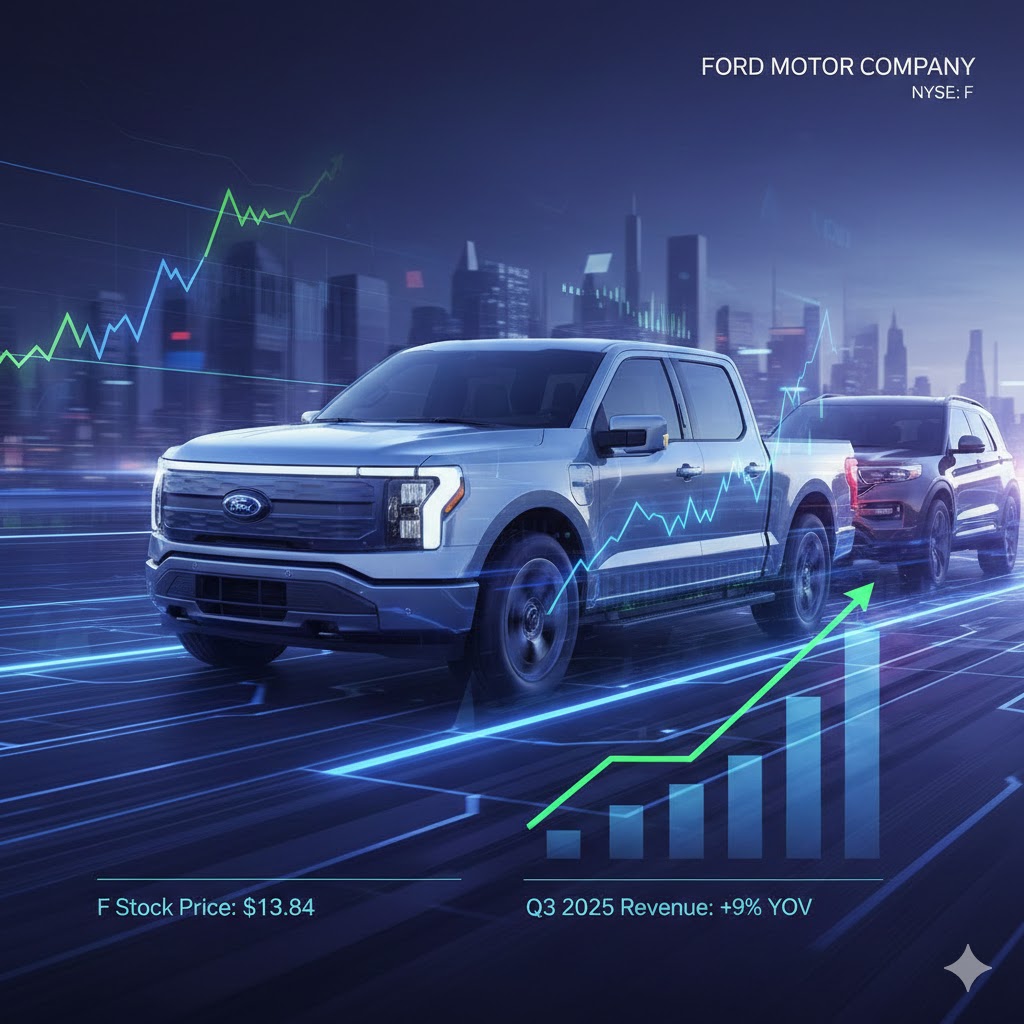
As of January 19, 2026, the Ford stock price stands at approximately $13.84, maintaining a resilient position following a series of strategic pivots throughout late 2025. Over the past 52 weeks, the stock has traded in a range between $8.44 and $14.50. Investors are closely watching these partnership rumors, as a successful deal with BYD could be the catalyst that causes F stock to surge sharply in the coming quarters.
The logic behind the investor optimism is rooted in “cost-out” efficiency. BYD is widely considered the world leader in vertical integration for batteries, particularly with its lithium iron phosphate (LFP) “Blade Battery” technology. For Ford, which has struggled with the high capital intensity of its Ford Model e (electric) division, a partnership with BYD provides a shortcut to competitive pricing in the hybrid segment—a segment that is currently outperforming pure EVs in terms of consumer demand growth.
Key Market Statistics for Ford Motor Company (F):
| Metric | Current Value (Approx. Jan 2026) |
| F Stock Price | $13.84 |
| Market Capitalization | ~$55.7 Billion |
| P/E Ratio (TTM) | 11.66 |
| Dividend Yield | ~4.4% |
| 52-Week High | $14.50 |
| 52-Week Low | $8.44 |
Financial Fortress: Revenue Records vs. Structural Charges
To understand why Ford is seeking external battery partners like BYD, one must look at the Ford stock financial trajectory. In its Q3 2025 earnings report, Ford delivered a staggering $50.5 billion in revenue, marking a 9% year-over-year increase. However, the “bottom line” tells a more nuanced story. While net income reached $2.4 billion, the company is currently navigating a massive $19.5 billion special items charge related to the restructuring of its EV roadmap.
CEO Jim Farley has been transparent about the “disciplined focus on cost and quality.” The company’s Ford Pro (commercial) division remains a cash cow, generating high-margin EBIT, but the Ford Model e segment has faced headwinds from slowing EV adoption and pricing wars. By pivoting toward hybrids and sourcing batteries from a cost-leader like BYD, Ford aims to protect its margins while scaling its “Ford Blue” (gas/hybrid) and “Ford Pro” fleets.
The company’s adjusted free cash flow remains healthy, trending toward the high end of its $2 billion to $3 billion guidance for 2025. This liquidity provides Ford the “dry powder” needed to ink new supply deals and reconfigure its global assembly lines without compromising its attractive dividend yield, which remains a cornerstone of the F stock investment thesis for many retail and institutional holders.
Business Development and the 2026 Product Roadmap
The timing of the BYD talks aligns perfectly with Ford’s 2026 product development cycle. Ford has recently announced a major shift in its universal EV platform and a renewed commitment to hybrid technology. By 2030, Ford expects nearly 50% of its global volume to consist of hybrids, extended-range EVs (EREVs), and full battery electric vehicles.
For the 2026 model year, Ford is introducing:
- Expansion of the Tremor and STX trims across the Explorer and F-150 Lightning lineups.
- The “Tennessee Truck Plant” pivot, where the company is repurposing its BlueOval City site to produce highly profitable gas and hybrid trucks starting later this decade.
- A new Battery Energy Storage System (BESS) business, which will leverage excess battery capacity to create a diversified revenue stream.
Sourcing BYD batteries for international markets (such as Europe, South America, and Southeast Asia) allows Ford to stay competitive in regions where Chinese manufacturers are gaining ground. If Ford can integrate BYD’s low-cost cell technology into its popular global models like the Ranger or the Territory, the impact on F stock price could be significantly positive as global market share stabilizes.
Strategic Outlook: Why This Matters for Investors
The primary reason F stock surged sharply during previous earnings beats was the market’s realization that Ford is no longer chasing “EV volume at any cost.” Instead, the company is prioritizing “capital efficiency.” The potential BYD deal is the ultimate manifestation of this strategy.
If the partnership moves beyond “rumor” status, it represents a pragmatic admission: to win the middle-market hybrid race, Western OEMs may need to leverage Eastern battery supply chains. For Ford stock, this reduces the “execution risk” of building out its own Gigafactories entirely from scratch, a process that has proven more expensive and time-consuming than initially anticipated.
Furthermore, by keeping the BYD battery integration focused on “non-U.S. factories,” Ford cleverly navigates the protectionist hurdles of the Inflation Reduction Act (IRA) while still benefiting from global economies of scale. This “dual-track” supply chain—using CATL technology in Michigan and potentially BYD technology in overseas hubs—makes Ford one of the most agile legacy automakers in the world.
Conclusion
While the official word from Dearborn remains “no comment,” the strategic logic of a Ford-BYD alliance is too compelling to ignore. For investors tracking F stock, the focus remains on whether Ford can successfully blend its iconic brand and “Built Ford Tough” engineering with the world’s most efficient battery technology. If the talks culminate in a formal agreement, it could provide the fundamental support needed for Ford stock to break past its recent 52-week highs and establish a new baseline for growth in the electrified era.