The AI Renaissance of Kingsoft Cloud: A Deep Dive into the Infrastructure Powering China’s Intelligent Future

The dawn of 2026 has brought a renewed sense of vigor to the Chinese technology sector, particularly for those firms at the intersection of cloud infrastructure and artificial intelligence. In early trading sessions this January, a significant rally swept through US-listed Chinese AI application stocks. Kingsoft Cloud (NASDAQ: KC) emerged as a standout performer, with its share price surging by over 15% in early trading, while industry giants like Alibaba rose over 5% and Bilibili and Baidu followed with gains exceeding 3%.

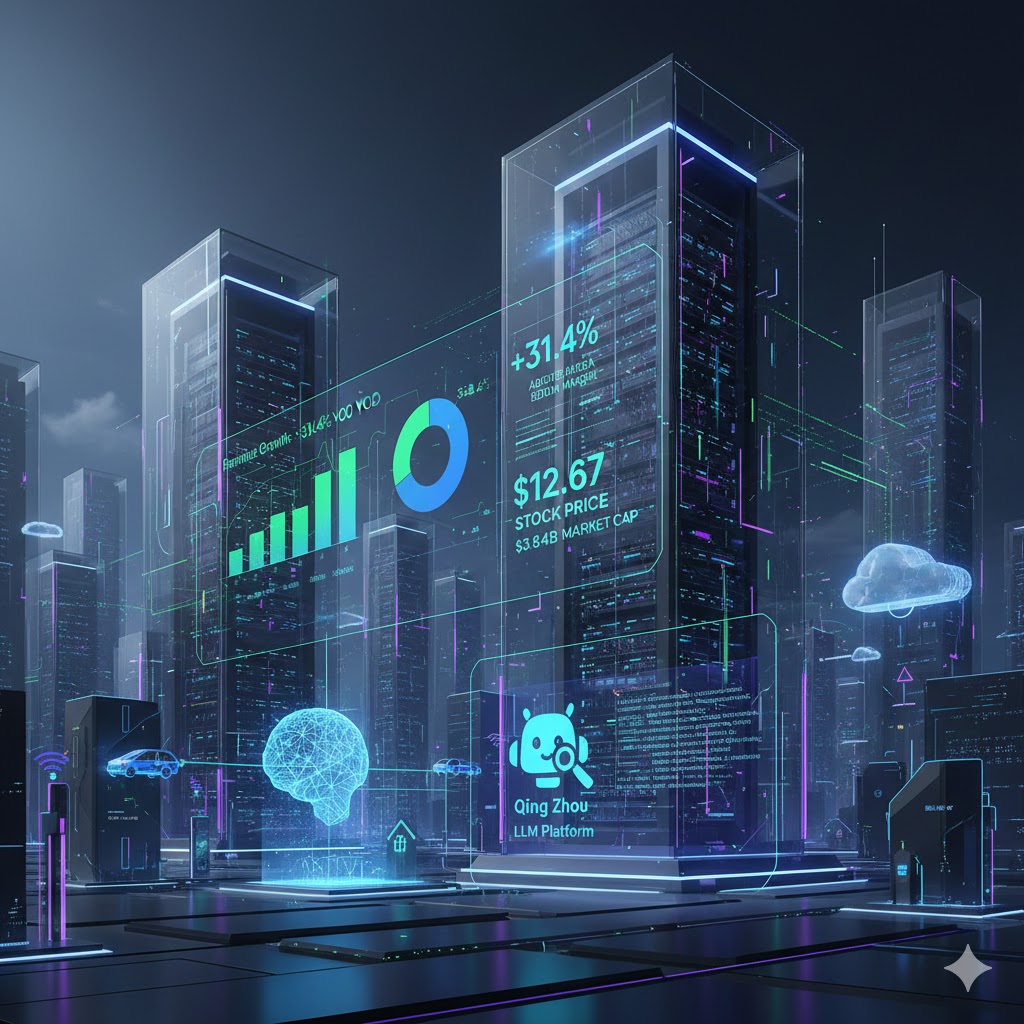
This sudden spike is not merely a byproduct of market sentiment; it is the culmination of a multi-quarter strategic pivot. As of January 12, 2026, Kingsoft Cloud’s stock is trading at approximately $12.67, reflecting a robust intraday gain and a significant recovery from its 52-week lows. With a market capitalization now hovering around $3.84 billion, the company is increasingly being viewed by analysts as the “pure-play” infrastructure backbone for the Xiaomi and Kingsoft ecosystems—a position that has become exponentially more valuable in the age of Large Language Models (LLMs).

Financial Trajectory: From Hyper-Growth to Structured Profitability

The most critical narrative shift for Kingsoft Cloud in recent months has been its transition from a loss-making growth entity to a firm demonstrating tangible operational leverage. According to the most recent financial disclosures for the third quarter of 2025, Kingsoft Cloud reported total revenues of RMB 2,478.0 million (approximately $348.1 million), representing a year-over-year acceleration to 31.4%.

This growth is significantly higher than the 10.47% annual growth recorded in 2024, signaling that the “AI-driven demand cycle” has moved from theoretical planning to actual billing. Perhaps the most celebrated milestone in the company’s recent history is the achievement of positive adjusted net profit for the first time in Q3 2025. Specifically, the company recorded an adjusted net profit of RMB 28.7 million, a stark contrast to the historical losses that had long weighed on its valuation.

The underlying metrics reveal an even more compelling story of efficiency:

  • Adjusted EBITDA: Reached RMB 826.6 million, a staggering 345.9% increase year-over-year.
  • Adjusted EBITDA Margin: Expanded to 33.4%, up from just 9.8% in the same period of 2024.
  • Gross Billing of AI Business: Surged by approximately 120% year-over-year, reaching RMB 782.4 million in a single quarter.

These figures suggest that Kingsoft Cloud is successfully navigating the high-cost environment of AI infrastructure by scaling its revenue faster than its depreciation and IDC (Internet Data Center) costs. While total operating loss on a GAAP basis stood at RMB 145.3 million, the narrowing gap and the “turnaround” to positive non-GAAP operating profit (RMB 15.4 million) have provided the fundamental “floor” for the current stock rally.
Strategic Ecosystem Integration: The Xiaomi-Kingsoft Synergy

Unlike independent cloud providers that must fight for every enterprise contract in a fragmented market, Kingsoft Cloud benefits from a “built-in” demand base through its relationship with Xiaomi and the Kingsoft Group (WPS Office).

In 2025, revenue from the Xiaomi and Kingsoft ecosystem reached RMB 1.82 billion for the first nine months alone. In Q3 2025, ecosystem revenue grew by 84% year-over-year, now accounting for roughly 28% of total revenue. This synergy is not just about sales; it is a collaborative R&D loop. For instance, as Xiaomi expands its footprint into Electric Vehicles (EVs) and smart home AI, the backend processing requirements for these millions of devices are naturally funneled into Kingsoft’s “Intelligent Computing Cloud.”

The company solidified this relationship in mid-2025 by entering into the 2025 Xiaomi Cooperation Framework Agreement. This three-year deal secures long-term IDC services and network hardware procurement, allowing Kingsoft Cloud to lock in supply chain costs while ensuring that its capacity expansion aligns perfectly with Xiaomi’s global hardware rollout. Furthermore, a successful capital raise of $359 million in late 2024 through new share placements—heavily supported by its parent groups—has provided the necessary “dry powder” to fund the next generation of GPU-intensive clusters.

Product Development: The Shift to “Intelligent Computing”

Kingsoft Cloud’s product roadmap has undergone a radical transformation, moving away from “commodity” storage and CDN (Content Delivery Network) services toward high-margin Intelligent Computing Units.

The company’s core focus is now on its Hanhai Large Model Platform and the Qing Zhou Knowledge Q&A Assistant. These are not just software layers but integrated “IaaS + PaaS” solutions. To maintain a competitive edge against larger rivals like Alibaba Cloud, Kingsoft has leaned heavily into hardware-software co-optimization. By partnering with global leaders like Intel, Kingsoft has deployed 4th and 5th Gen Xeon Scalable processors optimized specifically for TensorFlow and PyTorch frameworks.

Key developments in their product pipeline include:

  1. Serverless AI Inference: Allowing developers to deploy LLMs without managing underlying GPU clusters, significantly lowering the barrier to entry for mid-sized Chinese enterprises.
  2. GPU Elastic Compute: A specialized cloud instance designed for scientific computing and graphics rendering, which has seen high adoption among China’s top 100 mobile game developers—90% of whom already use Kingsoft’s services.
  3. Advanced Edge AI: Leveraging Xiaomi’s IoT ecosystem to process data closer to the user, reducing latency for applications like autonomous driving and real-time voice translation.

Market Expansion and Competitive Landscape

The Chinese cloud market is notoriously competitive, dominated by “hyperscalers” like Alibaba, Huawei, and Tencent. However, Kingsoft Cloud has carved out a “Tier 1.5” niche by positioning itself as the largest independent cloud service provider in China. This “independence” is a key selling point for enterprise customers who may be wary of hosting their data with a direct competitor in the e-commerce or social media space.

The company’s market penetration strategy is currently focused on three high-growth verticals:

  • Public Services and Healthcare: Utilizing AI to digitize medical records and power “Smart City” initiatives.
  • Financial Services: Providing secure, hybrid cloud environments for banking institutions moving toward AI-driven risk assessment.
  • AI Startups: Acting as the “foundry” for the next generation of Chinese LLM startups that require massive compute power but lack the capital to build their own data centers.

Market data from late 2025 indicates that while Alibaba Cloud maintains a dominant 33% share of the general IaaS market, Kingsoft Cloud has captured a significant and growing share of the AI-specific public cloud segment, which grew by over 55% industry-wide in the past year. By focusing on “high-quality” revenue—transactions that carry higher margins and stickier customer relationships—the company is successfully moving away from the “price wars” that characterized the cloud market between 2021 and 2023.

Navigating the Capital Intensive AI Arms Race

The primary challenge for Kingsoft Cloud remains the immense capital expenditure (CapEx) required to stay relevant in the AI era. In Q3 2025 alone, CapEx reached RMB 2,787.8 million. To mitigate the risk of over-leveraging its balance sheet, management has introduced a “Resource Pool” model.

As CEO Tao Zou noted in recent briefings, the company is pivoting toward a mix of asset ownership, profit sharing, and agent models. This hybrid approach allows Kingsoft Cloud to access high-end GPU resources through partnerships without carrying the full weight of the hardware on its balance sheet. This strategic flexibility was a key factor in the recent margin expansion; by optimizing the “fill rate” of its existing servers before committing to new builds, the company has managed to reduce IDC costs by 6.0% year-over-year even as its AI business grew.

Conclusion: A Strategic Inflection Point

The recent 15% surge in Kingsoft Cloud’s stock price is a reflection of the market finally pricing in the company’s successful pivot to AI. With a stabilized balance sheet, a first-ever quarterly adjusted profit, and a deep-seated integration into the Xiaomi ecosystem, Kingsoft Cloud is no longer just a “cloud storage” company. It has refashioned itself into a specialized AI infrastructure powerhouse.

As the company moves through 2026, the focus will remain on whether it can maintain this double-digit revenue growth while further expanding its operating margins. For institutional investors watching the Chinese ADR space, Kingsoft Cloud represents a unique case study in how a mid-sized player can leverage “ecosystem gravity” to compete in an industry of giants. While risks such as international trade volatility and GPU supply chain constraints remain, the current financial and operational trajectory suggests that Kingsoft Cloud has found its footing in the “Intelligent Era.”
Apple (AAPL) and Alphabet (GOOGL) AI Partnership Shakes Up Tech Stocks: A Deep Dive into Market Reaction, Financials, and Long-Term Strategic Implications

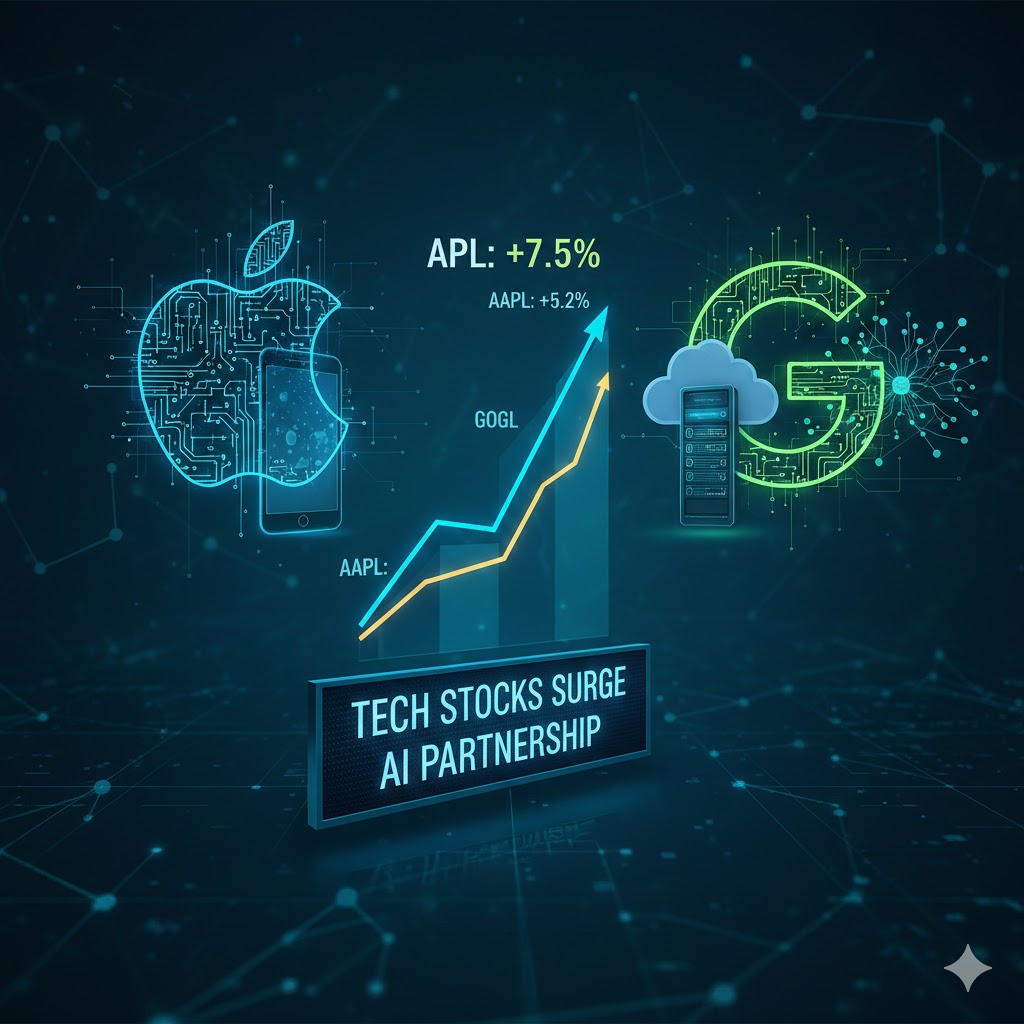
On January 12, 2026, Apple Inc and Alphabet Inc (Google’s parent company) officially announced a multi-year strategic partnership in artificial intelligence, under which Apple’s next-generation Apple Foundation Models will be based on Google’s advanced AI Gemini models and cloud infrastructure. The agreement also confirms that future Apple Intelligence features — including a significantly upgraded and more personalized Siri voice assistant — will be powered by Google’s AI models. This marks a rare collaboration between two longstanding tech competitors and has resonated across global equity markets, particularly in AAPL stock and GOOGL stock.

Below, we provide a comprehensive finance-oriented analysis of this development, covering relevant stock pricing data, fundamental metrics from financial statements, strategic considerations around product development and AI adoption, as well as market sentiment. The purpose is to clarify how this high-impact AI news interacts with the valuation and strategic trajectories of these companies — without offering investment recommendations.


Current Trading Snapshot: AAPL Stock and GOOGL Stock

As of early U.S. trading on January 13, 2026:

Apple Inc (NASDAQ: AAPL)

  • AAPL stock price: $260.25 per share
  • Market capitalization: ~$3.005 trillion
  • PE ratio: 30.28
  • EPS: 6.59

Alphabet Inc (NASDAQ: GOOGL)

  • GOOGL stock price: $331.86 per share
  • Market capitalization: ~$2.938 trillion
  • PE ratio: 23.65
  • EPS: 10.13

These data points are reflective of mid-January 2026 markets, a period of active price discovery following the AI partnership announcement and broader interest in AI-related equities.


Strategic Context: Why the Apple-Google AI Deal Matters

Apple’s decision to base its future foundational AI models on Google’s Gemini represents a marked departure from its traditional preference for proprietary software systems. According to the companies’ joint statement, Apple “determined that Google’s AI technology provides the most capable foundation” for its next generation of Apple Foundation Models — a series of AI systems that underpin a growing suite of device intelligence features.

Traditionally, Apple has emphasized on-device processing and privacy in its technology stack — an approach that sets it apart from most cloud-based AI companies. However, Apple’s internal efforts to build advanced large language models (LLMs) have faced persistent technical and market speed challenges, leaving flagship products like Apple Intelligence and Siri without the breakthrough capabilities seen in competitor offerings.

This partnership can be viewed through several strategic lenses:

  1. AI Capability Gap: Apple’s own large-model efforts have lagged, necessitating external support for state-of-the-art performance.
  2. Privacy Preservation: The deal structure continues to honor Apple’s privacy commitments, with Apple Intelligence computations still processed on device or via Apple’s private cloud.
  3. Ecosystem Integration: Siri — long viewed as Apple’s weakest mainstream product — gets a substantive AI upgrade that could boost ecosystem stickiness.

Market Reaction: GOOGL and AAPL Stocks Across Exchanges

GOOGL stock price exhibited notable investor enthusiasm — driven in part by the partnership news and a broader AI surge — with the market valuing Alphabet above $4 trillion on certain intraday moves shortly after the announcement, according to multiple financial outlets.

This represents both a quantitative shift in valuation and a qualitative shift in investor perception of Alphabet’s role in the AI economy. Investors are increasingly framing Google not just as a search and advertising powerhouse but as a cornerstone AI infrastructure provider. The endorsement from Apple — a direct competitor in numerous markets — has been interpreted as a significant external validation of Google’s AI leadership.

By contrast, AAPL stock price did not see an extreme move at opening, which aligns with Apple’s historical pattern of measured stock reactions to strategic news, particularly when the news implies reliance on external technologies. The uptake of AI capabilities may improve Apple’s product competitiveness, but it also highlights a capability gap that Apple previously tried to bridge internally.


Financial Statements and AI Strategy Alignment

Apple Inc: Balancing Device Sales with Software Era Growth

Apple’s growth has traditionally been driven by premium hardware — iPhone, Mac, iPad, and wearables — coupled with expanding services revenue. Its fundamental financial profile (noting a PE ratio above 30) suggests that markets have priced in expected long-term earnings growth, much of which is tied to recurring revenue from services and ecosystem monetization.

For Apple, AI integration potentially amplifies:

  • Subscription revenue through value-added AI services (e.g., AI-enhanced Apple Music, Apple Fitness+).
  • Device attractiveness and replacement cycle strength via advanced Siri and device intelligence.
  • Competitive positioning against Android and other AI-enabled ecosystems.

However, if significant AI workload shifts toward Google’s infrastructure, Apple’s revenue capture in the AI value chain may remain limited compared to peers with native cloud or AI platform businesses.

Alphabet Inc: Monetizing AI at Scale

Google — as part of Alphabet — directly benefits from:

  • Cloud infrastructure usage tied to AI workloads.
  • Licensing and usage of Gemini models.
  • Enhanced ad-tech positioning via AI-driven search and analytics improvements.

GOOGL’s lower PE ratio (relative to Apple) reflects its mix of high-growth cloud and AI segments with more traditional advertising revenue, which may experience slower growth. However, the AI partnership with Apple could tilt this mix more toward recurring AI revenue streams, attracting a re-rating of valuation multiples over time.


Competitor and Market Landscape

Beyond AAPL and GOOGL, the AI arms race in tech stocks has had broader implications:

  • Nvidia remains a dominant play in AI hardware, with its GPUs powering much of the cloud compute layer. Although Nvidia isn’t directly involved in this Apple-Google deal, its AI ecosystem exposure has driven sustained enthusiasm in markets.
  • Microsoft and OpenAI rivals continue to compete for enterprise and consumer AI workloads, influencing tech stock correlations observed in late 2025 and early 2026.
  • Consumer Android OEMs that integrate Gemini into products have also helped expand Google’s ecosystem, further validating its AI platform.

The combined push by these companies has necessitated a recalibration of valuations across the tech sector, with investors placing increased emphasis on AI capability adoption rates and ecosystem lock-in effects.


Risks and Considerations

While the Apple-Google partnership offers synergistic benefits, several risk vectors bear monitoring:

  1. Execution Risk: Integrating sophisticated models across billions of Apple devices without degrading privacy or performance is non-trivial.
  2. Competitive Risk: Other ecosystem players (e.g., Microsoft/Anthropic) could accelerate competitive AI features faster than anticipated.
  3. Regulatory Risk: Tech antitrust scrutiny in the U.S. and EU may intensify scrutiny over deep integrations among major platform providers.

It’s also important to note that Apple could still pursue internal AI development in parallel, especially for later foundational models, which might reduce long-term reliance on any external partner.


Summary of Key Impacts

CompanyStrategic ShiftStock Impact (Short-Term)Long-Term Potential
Apple (AAPL)Outsourcing AI core models to Google GeminiModerate price response; stabilityImproved product AI leads to ecosystem stickiness, but reliance signals product development headwinds
Alphabet (GOOGL)Validation as AI infrastructure leaderStrong investor sentiment; market cap milestoneExpanded cloud and AI licensing revenue, broader ecosystem leverage

Conclusion

The Apple-Google multi-year AI partnership marks a pivotal strategic inflection point in the ongoing competition for AI leadership. For AAPL stock, it signals an acceleration in AI-enabled product evolution but also underscores Apple’s reliance on external AI expertise. For GOOGL stock, it may reinforce the company’s positioning as a foundational AI provider across technology ecosystems.

Investors and analysts will closely watch updates to Apple’s AI roadmap — particularly how Siri and Apple Intelligence improvements translate into user engagement — as well as Alphabet’s evolving monetization strategy for Gemini and cloud services. With both stocks now moving in an environment where AI capability and strategic alliances carry outsized influence on valuation multiples, tech equities could continue to reflect investor optimism around the long-term revenue implications of foundational AI adoption.