Orbital Ascent: Decoding the Surge in Space Stocks as PL Hits Record High and ASTS Gains Momentum

The U.S. equity market’s fascination with the final frontier continues to intensify, with the space technology sector exhibiting sustained and notable vigor. In a recent trading session, this momentum crystallized in the impressive performance of two key players: Planet Labs PBC (PL), known for its Earth observation satellite constellation and a notable partnership with Google, saw its PL stock price surge over 6%, catapulting the shares to an all-time high. In tandem, AST SpaceMobile, Inc. (ASTS), the company pioneering a space-based cellular broadband network, advanced more than 5%. This coordinated upward movement for PL stock and ASTS stock is not a random fluctuation but a significant market signal, reflecting a potent confluence of sector-wide tailwinds, company-specific milestones, and a growing investor conviction in the commercial viability of space-based infrastructure. This analysis delves deep into the catalysts behind this activity, examining the financial health, strategic trajectories, technological roadmaps, and market expansion efforts of both Planet Labs and AST SpaceMobile. By placing their recent stock performance under a microscope, we can better understand the evolving narrative driving investor enthusiasm for this cutting-edge sector.

The recent surge in Planet Labs stock to a historic peak is a multifaceted story rooted in both its foundational technology and strategic alliances. Planet operates the world’s largest fleet of Earth-imaging satellites, providing daily, high-resolution scans of the globe. Its financial performance has been characterized by robust top-line growth, albeit alongside the significant investments typical of a capital-intensive, growth-phase company. In its most recent quarterly report for the period ending October 31, 2023, Planet reported revenue of $53.7 million, a year-over-year increase of 11%. More importantly, its annual recurring revenue (ARR) stood at $222 million, showcasing the sticky, subscription-based nature of its data business. The company has consistently emphasized improving its path to profitability, reporting a narrowed non-GAAP net loss and achieving a positive adjusted EBITDA in recent quarters—a key metric for investors scrutinizing the financial discipline of high-growth tech firms. The specific 6% rally that propelled PL stock to its record high can be attributed to several reinforcing factors. Foremost is the deepening and highly visible partnership with Google Cloud. This collaboration integrates Planet’s daily satellite imagery and data analytics directly into Google Cloud’s infrastructure and the Google Earth Engine platform. For customers in sectors like agriculture, forestry, defense, and finance, this integration dramatically lowers the barrier to accessing and analyzing geospatial intelligence. The market perceives this partnership not just as a revenue channel, but as a powerful validation of Planet’s data platform and a critical driver of future customer acquisition at scale. Every positive development or expansion announced within this Google partnership acts as a catalyst for PL stock price appreciation, as seen in the recent session.

Beyond partnerships, Planet Labs’ business development strategy is a blueprint for systematic market penetration. The company has moved beyond merely selling imagery to offering fully-fledged, sector-specific solutions. Its “Planet Insights” platform and tools like “Planet Fusion” and “Planet Tasking” allow customers to derive actionable intelligence, such as monitoring supply chains, assessing crop health, or detecting environmental changes. The progress in signing large-scale, enterprise and government contracts is a testament to this strategy’s success. For instance, recent contracts with entities like the U.S. National Reconnaissance Office (NRO) and various international agricultural conglomerates demonstrate the expansion of its addressable market from niche users to mainstream, mission-critical applications. The market’s willingness to bid Planet Labs stock to new highs suggests growing confidence that these contracts will translate into durable, high-margin recurring revenue streams, accelerating the company’s journey toward sustainable cash flow generation.

Simultaneously, the 5%+ gain for AST SpaceMobile stock tells a different, yet equally compelling, story within the space ecosystem. ASTS is pursuing an audacious vision: to build the first and only space-based cellular broadband network accessible directly by standard, unmodified mobile phones. The company’s financials reflect its pre-revenue, heavy R&D phase. It reported a net loss for the third quarter of 2023, with operational expenses heavily geared toward the development and launch of its initial commercial satellites, the BlueBird Block 1 series. For investors in AST SpaceMobile stock, the current valuation is almost entirely a bet on future execution and total addressable market capture. Therefore, stock price movements are exquisitely sensitive to technical and operational milestones. The recent gain of over 5% is directly tied to such milestones. Successful ongoing tests of its technology—like the recent achievement of a 14 Mbps download speed on a standard Samsung Galaxy smartphone via its BlueWalker 3 test satellite—serve as powerful, tangible proofs-of-concept. Each successful test de-risks the technological narrative and strengthens the investment thesis, leading to moments where ASTS stock surged sharply on positive news flow.

The product development roadmap for AST SpaceMobile is its core narrative driver. The critical path involves the manufacturing, launch, and operational deployment of its first five commercial BlueBird satellites. The company has secured launch capacity with SpaceX, a partner known for reliability, which mitigates one layer of operational risk. Any announcement regarding on-schedule progress in satellite manufacturing or a firm launch date acts as a positive catalyst for the ASTS stock price. The market is closely monitoring the capital required to complete this first constellation phase and the subsequent negotiations with global mobile network operators (MNOs) for commercial agreements. Recent memoranda of understanding and testing agreements with giants like AT&T, Vodafone, Rakuten, and others are not merely press releases; they are essential precursors to revenue-generating partnerships. The recent stock gain reflects accumulating optimism that these technical and partnership milestones are converging, bringing the prospect of initial commercial service (planned for late 2024/2025) closer to reality.

The market expansion strategy for both companies, while distinct, shares a common theme of leveraging unique space assets to solve terrestrial problems at a global scale. For Planet Labs (PL), expansion is about vertical depth and data product sophistication. It is progressing from mapping the Earth to interpreting its changes in near real-time for an ever-broader set of decision-makers in both the public and private sectors. For AST SpaceMobile, expansion is fundamentally about geographic and demographic reach. Its target is the estimated 5 billion+ mobile subscribers who live in areas with poor or no terrestrial coverage. The progress here is measured in signed MNO partnerships that collectively cover vast populations, particularly in emerging markets across Latin America, Africa, and parts of Asia. The recent positive price action for both PL stock and ASTS stock indicates that investors are rewarding tangible progress in these expansion plans, viewing them not as speculative dreams but as executable strategies with defined market opportunities.

It is crucial to contextualize these individual stock movements within the broader “space concept” theme that has remained persistently active. The sector benefits from powerful macroeconomic and technological tailwinds. The precipitous decline in launch costs, primarily driven by SpaceX’s reusable rocket technology, has fundamentally altered the economics of space-based business. Furthermore, increasing geopolitical focus on strategic autonomy, climate change monitoring, and global connectivity has opened substantial government funding and procurement opportunities. The U.S. government’s continued support for commercial space services through agencies like the NRO, NASA, and the Space Force creates a reliable baseline demand for companies like Planet Labs. For AST SpaceMobile, global initiatives to bridge the digital divide can align policy support with its commercial mission. This favorable sectoral backdrop provides a rising tide that lifts all credible boats, amplifying positive company-specific news and contributing to days where space stocks exhibit strong collective performance.

However, a rigorous analysis must also acknowledge the significant risks and challenges that underpin the high volatility often associated with these names. For Planet Labs, competition is intensifying from other geospatial data providers, including Airbus, Maxar Technologies, and a growing number of startups. Its path to consistent profitability remains a work in progress, and any slowdown in government contract renewals or large enterprise deals could pressure growth projections, potentially leading to a correction in the PL stock price after its record run. For AST SpaceMobile, the risks are arguably more acute. The company faces a substantial funding requirement to complete and launch its satellite constellation. Any delays in manufacturing, launch, or in-orbit validation could severely impact its timeline and burn rate. The technological challenge of providing reliable, high-quality service from space to standard phones at a competitive cost is immense, and commercial negotiations with MNOs are complex. Any negative development on these fronts could cause AST SpaceMobile stock to give back its gains rapidly, as the stock is highly sensitive to perceived execution risk. Both companies also operate within a stringent regulatory environment, requiring approvals from bodies like the FCC and international counterparts, adding another layer of potential delay and uncertainty.

In conclusion, the sustained activity in space stocks, exemplified by Planet Labs’ record-breaking surge and AST SpaceMobile’s solid gain, represents a sophisticated market response to a series of converging positive developments. The rally in PL stock is a direct endorsement of its successful land-and-expand strategy, its powerful alliance with Google Cloud, and its demonstrable progress in converting its unique satellite data into a scalable, high-value SaaS business model with improving financial metrics. The simultaneous rise in ASTS stock reflects growing confidence in the company’s ability to translate its groundbreaking technological demonstrations into a viable commercial satellite constellation, backed by crucial partnerships with major telecom operators. Together, their performance underscores a broader investor thesis: that space-based infrastructure is transitioning from a government-dominated domain to a dynamic, multi-faceted commercial market with enormous addressable opportunities in data and connectivity. While the journeys for both Planet Labs stock and AST SpaceMobile stock will undoubtedly be marked by volatility driven by technical milestones, funding rounds, and competitive dynamics, the recent price action signals a maturing market that is increasingly willing to value these companies on their execution against ambitious, long-term strategic plans. The day’s trading affirmed that in the new space economy, credible progress in technology, partnerships, and market access can directly catalyze significant investor enthusiasm and move stock prices sharply higher.
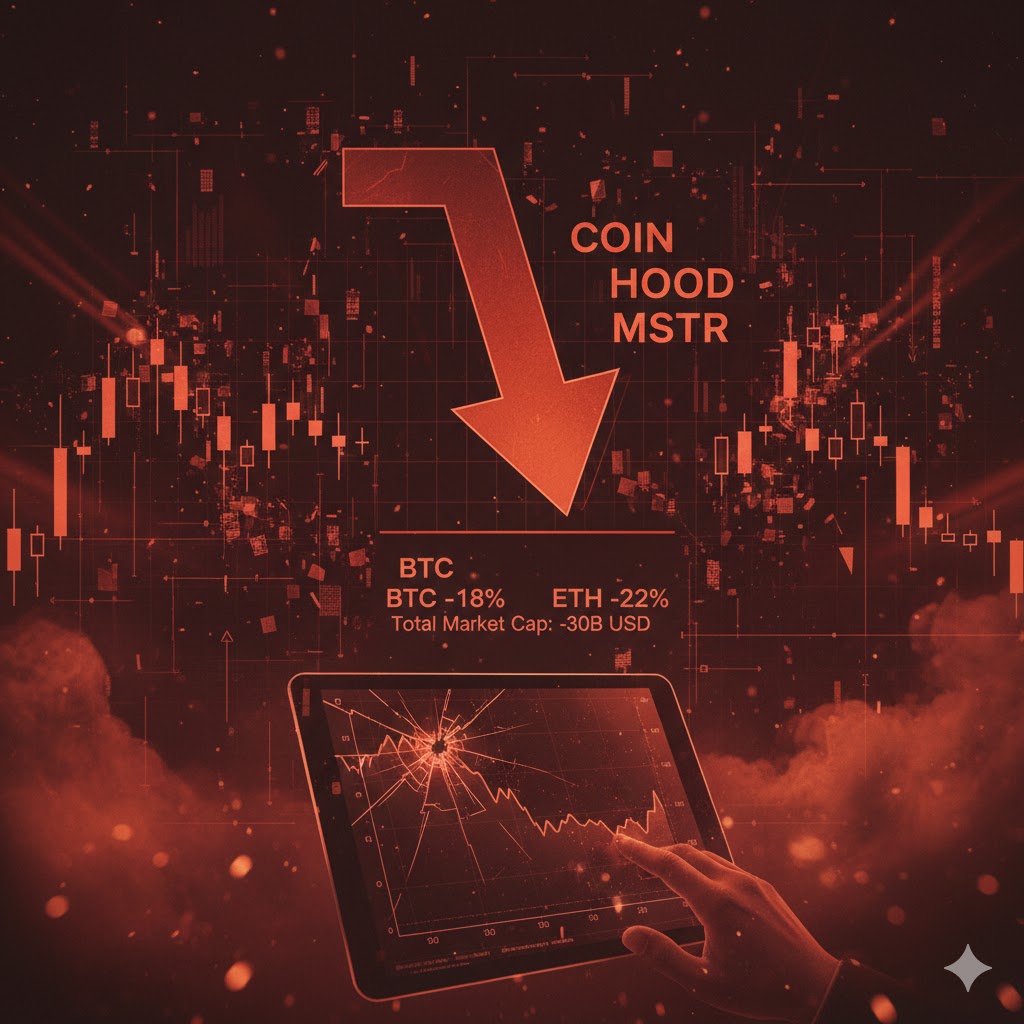
Cryptocurrency Sector Faces Sharp Sell-Off: Analyzing the Plunge in COIN, HOOD, and Key Crypto-Linked Stocks – Strategic Implications Amidst Market Turbulence

January 15th witnessed a significant and broad-based retreat across the cryptocurrency equity landscape, a stark reminder of the inherent volatility and sensitivity of this asset class. Major publicly-traded companies with deep ties to digital asset markets experienced pronounced declines, with Circle (the entity behind the USDC stablecoin, though privately held, its associated investment vehicles and partners felt pressure), Robinhood Markets (HOOD) dropping over 7%, Coinbase Global, Inc. (COIN) falling more than 6%, and strategic investment entities focused on crypto, such as certain ETFs or holding companies, declining over 4%. This synchronous downturn was not an isolated technical correction but a confluence of macroeconomic triggers, sector-specific headwinds, and profit-taking following a robust year-end rally. This analysis delves into the intricate dynamics behind this sell-off, examining its implications for each mentioned entity—particularly the publicly traded COIN stock and HOOD stock—by scrutinizing their latest financial health, business model resilience, product roadmaps, and their navigation of an increasingly complex regulatory and competitive landscape. The objective is to provide a comprehensive, data-driven overview of the forces shaping their market valuation without venturing into speculative investment guidance.

The immediate catalyst for the January 15th sell-off can be traced to a potent mix of macroeconomic apprehension and crypto-native developments. Freshly released U.S. inflation data, while showing moderation, reinforced the market’s expectation that the Federal Reserve may maintain a higher-for-longer interest rate posture. This environment diminishes the relative attractiveness of non-yielding, speculative assets like cryptocurrencies. Concurrently, significant outflows from the newly launched spot Bitcoin Exchange-Traded Funds (ETFs)—a landmark development initially hailed as a major bullish catalyst—spooked investors. The initial “sell the news” behavior, where Grayscale’s Bitcoin Trust (GBTC) saw substantial capital exit as it converted to an ETF, created selling pressure on the underlying Bitcoin price, which breached key psychological support levels. Bitcoin’s drop from around $43,000 to below $42,500 triggered a cascade of liquidations in the derivatives market and risk-off sentiment across the entire crypto complex. For equity investors, stocks like Coinbase stock are viewed as leveraged bets on crypto asset prices and trading volumes; thus, a downturn in Bitcoin and Ethereum directly pressures their core revenue projections. Similarly, Robinhood stock is increasingly sensitive to crypto transaction revenues, making it vulnerable to the same market sentiment shifts. The day’s price action, where COIN stock price fell sharply alongside peers, underscored this high-beta relationship.

A granular examination of Coinbase Global, Inc. (COIN) is imperative to understand the sector’s health. As the largest U.S. crypto exchange, its fortunes are tethered to trading activity. The company’s Q3 2023 financial results showcased a business recovering from the “crypto winter,” with total revenue surging 14% quarter-over-quarter to $674 million, significantly driven by a 59% increase in consumer transaction revenue, which hit $288 million. Subscription and services revenue, a critical pillar for diversification, contributed $334 million, buoyed by stablecoin interest income and blockchain rewards. However, the Q3 figures also revealed a persistent reliance on transaction fees from a relatively small cohort of high-frequency traders. The company turned a modest net income of $2 million on a GAAP basis, a notable improvement from prior losses. The key risk, highlighted by the January 15th drop, is the volatility of this transaction revenue. A sustained market downturn would immediately impact this line item. Strategically, Coinbase is aggressively pursuing international expansion and regulatory clarity. Its “Go Broad, Go Deep” strategy involves launching derivatives exchanges in select European markets and deepening its institutional offerings with products like Coinbase Prime and its Base layer-2 blockchain. The success of these initiatives is crucial for reducing its dependency on volatile U.S. retail spot trading. The market’s recent punishment of COIN stock reflects concerns that near-term trading volume headwinds may offset these long-term strategic gains. The Coinbase stock price is thus in a delicate balance between executing its diversification roadmap and navigating cyclical market storms.

Robinhood Markets, Inc. (HOOD) presents a unique case. While known for democratizing stock trading, its crypto segment has become a vital growth engine and a point of volatility. In Q3 2023, Robinhood reported crypto transaction revenues of $23 million, a sequential decline from $31 million in Q2, even as total net revenue grew to $467 million. This underscores that while crypto is important, it is not the sole driver of HOOD stock valuation. The company’s broader financial picture shows strength: it achieved GAAP profitability with net income of $85 million and demonstrated robust growth in net deposits and funded customers. Its product development is focused on expanding its core offerings, such as launching individual retirement accounts (IRAs) and enhancing its options and cash management features. However, its crypto business faces distinct challenges. Regulatory scrutiny from the Securities and Exchange Commission (SEC) looms large, with the agency having issued a Wells Notice to Robinhood’s crypto arm. This overhang creates uncertainty and could potentially limit product offerings. The January 15th decline in Robinhood stock was therefore a reaction to both the general crypto market weakness, which pressures its transaction-based crypto revenue, and the persistent regulatory risks that could cap the growth of this segment. For Robinhood, the path forward involves continuing to grow its holistic financial platform while meticulously navigating the regulatory maze surrounding digital assets. A sharp or prolonged crypto downturn tests the resilience of its diversified model, but its profitability provides a crucial buffer that pure-play crypto exchanges may lack.

While Circle remains private, its influence and the performance of related investment vehicles are worth contextualizing. As the issuer of the USDC stablecoin, Circle’s health is tied to the stablecoin’s market share and the interest income generated from its reserves. USDC’s market capitalization has faced pressure in a competitive landscape dominated by Tether (USDT), though it remains a critical infrastructure piece for the crypto economy. The “near 10%” decline referenced likely pertains to shares of special purpose acquisition companies (SPACs) or investment trusts previously linked to a potential Circle public listing, or to private market valuations. Circle’s business model is fundamentally different from exchanges: its primary revenue comes from interest on the reserves backing USDC and fees from institutional issuance and redemption. In a higher interest rate environment, this can be lucrative, but it also attracts regulatory focus on reserve composition and transparency. A broad crypto sell-off can impact USDC demand as trading activity cools, indirectly affecting Circle’s metrics. Its strategic planning is intensely focused on establishing a compliant, global framework for digital dollars, including pursuing a federal banking charter and expanding its presence in key international markets.

The broader “crypto concept” stocks, represented here by entities like Strategy (potentially referring to a crypto-focused ETF such as the Bitwise Crypto Industry Innovators ETF (BITQ) or a holding company), encapsulate the sector-wide risk. These investment vehicles provide diversified exposure to publicly-traded companies involved in blockchain and crypto. Their decline of over 4% on January 15th was a direct function of the sell-off in their underlying holdings, including companies like Coinbase, Marathon Digital, and Riot Platforms. The performance of these ETFs is a pure beta play on the crypto equity sector. Their market development progress is linked to investor appetite for simplified, regulated access to the crypto economy. Recent approvals for spot Bitcoin ETFs have ironically created competition for these equity-focused products, as some investors may prefer direct Bitcoin exposure over equities. This evolving competitive landscape adds another layer of complexity for these “strategy” stocks.

Beyond individual company financials, profound macro and regulatory currents are shaping the terrain. The post-ETF approval landscape has introduced a new dynamic. While the ETFs represent monumental progress for institutional adoption, their initial trading days have revealed a nuanced reality: significant capital is rotating from existing products (like GBTC) into newer, lower-fee options, creating net outflows that pressure Bitcoin’s price in the short term. This, coupled with renewed hawkish tones from some Fed officials regarding inflation, created a perfect storm of profit-taking. Furthermore, the regulatory environment remains a sword of Damocles. While the ETF approvals signaled a degree of regulatory acceptance for the underlying asset (Bitcoin), the SEC’s ongoing enforcement actions against other crypto firms—and its persistent stance that most other tokens are securities—continues to cast a long shadow. This regulatory uncertainty directly impacts the business development and product rollout plans of companies like Coinbase and Robinhood Crypto, potentially delaying new asset listings or service expansions.

In conclusion, the sharp pullback in cryptocurrency-linked equities on January 15th was a multifaceted event, rooted in transient market sentiment, macroeconomic recalibrations, and the complex aftershocks of recent structural market developments. For Coinbase stock, the event highlighted its inescapable cyclicality and the critical importance of its diversification efforts into subscriptions, international markets, and blockchain infrastructure. Its COIN stock price will remain a high-beta reflection of crypto market sentiment until its non-transaction revenues dominate its income statement. For Robinhood stock, the decline underscored its dual identity as a growing fintech platform and a crypto intermediary, with the latter introducing regulatory and volatility risks that can intermittently overshadow its broader progress. The sell-off in related strategic investment vehicles simply mirrored this sector-wide recalibration of risk. Looking ahead, the trajectory of these stocks will hinge not merely on daily Bitcoin price fluctuations, but on their demonstrated ability to execute strategic plans—growing user bases, expanding high-margin service lines, navigating regulatory hurdles, and achieving sustainable profitability—amidst the inherent turbulence of the cryptocurrency markets. The day’s trading served as a potent reminder that while the long-term narrative of digital asset integration continues to develop, the path for COIN stock, HOOD stock, and their peers will be punctuated by periods of sharp volatility where stock prices surged sharply upward or, as witnessed, retreat with equal force. Investors and observers must parse through the noise of daily price action to focus on the fundamental execution and adaptive strategies of these companies as they build within one of finance’s most dynamic and challenging sectors.