Microsoft(MSFT) CEO Satya Nadella has warned that the current artificial intelligence boom risks turning into a speculative bubble unless the technology’s applications extend beyond big tech companies and wealthy economies.
Speaking at the World Economic Forum annual meeting in Davos on Tuesday, January 20, Nadella emphasized that the long-term success of AI depends on its adoption across a broader range of industries and its penetration into regions outside of developed nations. He noted that if only technology companies benefit from the rise of AI while other sectors are left behind, it would be a “clear sign of a bubble.”
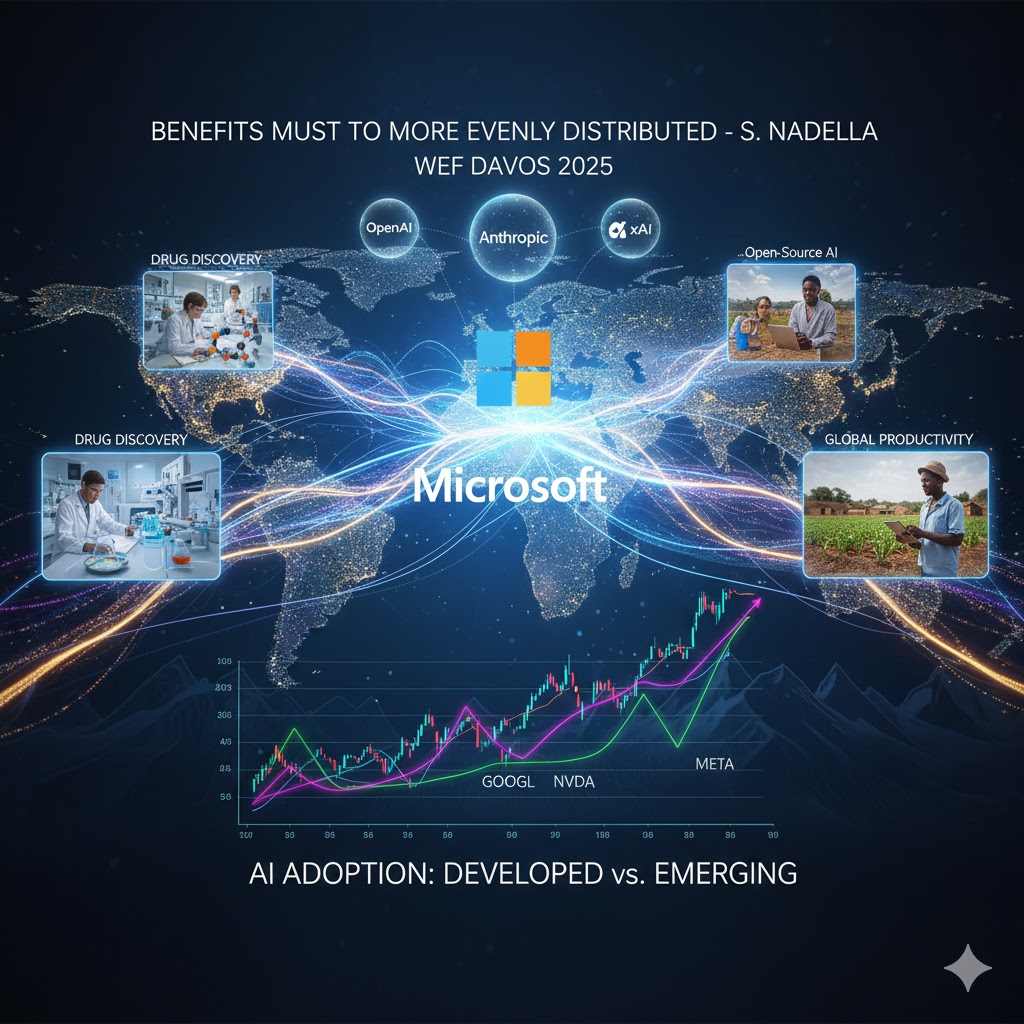
Data from Microsoft and other tech firms highlight a significant divide in global AI adoption, with productivity gains and workplace applications currently concentrated in more affluent, developed countries. This uneven development pattern is fueling industry concerns regarding the sustainability of returns on AI investment.
Despite these concerns, Nadella expressed confidence in AI’s transformative potential, asserting that the technology will revolutionize various industries—such as drug discovery—and ultimately drive global economic growth.
Technology Diffusion as a Litmus Test for Bubbles
During a conversation with BlackRock CEO Larry Fink, Nadella made it clear that more equitable distribution of benefits is key to AI avoiding a bubble scenario. He stated:
“By definition, for this not to be a bubble, you need the benefits of this technology to be much more evenly distributed.”
The Microsoft chief remains optimistic about the future of AI technology. He noted:
“I’m more confident that this technology will actually build on top of cloud and mobile, spread faster, change the productivity curve, and create local surplus and economic growth everywhere in the world.”
Nadella’s remarks came on the opening day of the World Economic Forum, kicking off a series of speeches by high-profile tech executives, including Google DeepMind CEO Demis Hassabis and Anthropic founder Dario Amodei.
A Multi-Model Strategy Replaces Exclusive Dependency
Nadella reiterated his view on the future landscape of AI, suggesting that the market will not rely on a single dominant model provider. This perspective has driven Microsoft’s partnership strategy with multiple leading AI firms, including Anthropic, xAI, and OpenAI.
Microsoft previously gained a significant first-mover advantage through its $14 billion investment in OpenAI, which granted it exclusive access to the ChatGPT creator’s technology and priority in data center collaborations. However, following a restructuring of the partnership last October, Microsoft has relinquished exclusive rights to OpenAI’s data center needs and is set to lose exclusive access to its research and models by the early 2030s.
Nadella emphasized that in the future, enterprises will have the flexibility to utilize a variety of models—including open-source options—and can even build smaller, more cost-effective proprietary models using techniques like “distillation.” He stated:
“So, the core competency of any application or any company is how they compose these models with context engineering or their own data. As long as people have an answer to that, they will keep making progress.”